
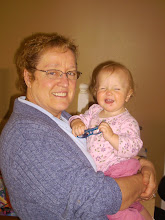
I am sitting at my computer and looking out my window at a spring snow storm. Things have improved and I can see the house a bit down the street that an hour ago was engulfed in white. The blowing wet snow reminds me of storms when I was a girl. It has me thinking about my parents and my extended family. I am supremely grateful that even in the days when I could have been resentful and expressed that resentment to my parents I did not. It makes me wonder if most children feel resentful as I have occasionally done, and if most parents fall short of what their children wished they were. I decided when my father was still alive, that since I loved him, it was only self-defeating and negative to let his short-comings, which he had in abundance, overwhelm my good feelings. He was a bit of a riddle and I now think he had some definite mental health challenges that overwhelmed HIM in the last years of his life. His advancing negativity had caused him to frame many things in a light I don't believe was true for him when the events really happened. I had been there for some of those times and the stories he told then made no sense. However, no one should be judged by what they are post-stroke, or in the last years of a long, successful life. However I have seen this tendency to re-write the past in others, some much younger and I think it leads to unhappiness for everyone involved. I wonder if the negativity and criticism of parents by their children has little to do with any real hardship, slight, abuse or neglect. I have seen it come from children, who in my view, had very little to complain about.
One of my current projects for family history is to digitize the pictures we took when our children were growing up. As I look at those pictures, my oldest child at his first birthday, our children hanging upside down from a jungle gym or climbing trees, I think of how I felt in those years. We, my husband and I, were immersed in making our dreams for ourselves and our children come true. We were both children of a different generation, one that believed that food on the table, a roof over their heads, and some moral instruction was all that was required of parents. We, however, believed that supporting and encouraging our children in their activities, which our parents had shown little interest in doing, was also necessary. I'm not sure now where this idea even came from. Whatever its source, it made us provide lessons and drive them, attend their games, swim competitions and recitals, encourage and cheer them on in everything. WE even told them that we would try to give them everything they wanted that we could. We wanted them to know that the world would respond to them in a positive way. We thought this would ensure the self-esteem and confidence they would need to succeed in life. Realistically, it should have been impossible to spoil them since we could not have given any of them everything they wanted. That, too, mirrors life, in my view.
As an adult child I had a firm handle on what my responsibilities were toward my parents. When my children were small, we visited their grand-parents up to six times per year each, when we could, and tried to teach them that their grandparents were important people in their lives, people deserving of love. As I look at my children's generation now grown-up, I have some real worry about the unintended consequences of our generation's choices as parents of these children. I now see that it is possible to have a child bent on asking for things we could not give, who feels what seems to be an overwhelming resentment for things wanted and denied. From this perspective, anything done, any advantages given, can be minimized and the things missed resented. I also see children who seem to have no desire and feel no obligation to put anything into their relationship with their parents. It is almost as if our generation, by trying to give our children as much as we could of our time and energy, not only raised their expectations to an unrealistic level that now results in criticism not love, but contributed to the attitude that our value as parents was to help them and to do things for them. Now that they no longer need our help they no longer need us. Once a friend asked me if I thought it was worth it to have six children. I replied that it certainly increased the odds that you would have one who would care about you when you were old. I did not know at the time how prophetic that was. I feel very lucky and greatly blessed to have more than one. I try not to focus on the children who break my heart but instead count my blessings.
I see my children following our example in the degree of unselfish involvement they have in their children's activities and interests and I wonder what heartache is in store for them as parents of their own offspring. It gives new personal meaning to the concept of irony.
Sunday, March 3, 2013

Sunday, February 3, 2013
Mental Health, Evil and Personal Choice
I have been extremely busy at work for the last three months, and haven't written a blog for awhile. However, I have been thinking a lot about a number of issues, some of them quite philosophical. One of them is the issue of evil. What is evil and just how does it impinge on our lives?
Many philosophers have discussed the role of evil and I can't say that I am an expert on what other 'experts' have said. But I come from a philosophical tradition (Mormonism) that believes in evil and the influence of the Adversary, Satan, Lucifer, whatever you want to call him, in our lives. He tempts us to make 'wrong' or evil choices and we have the agency to personally choose to resist that evil or to give in to it.
Recently I have run across a couple of people who seem to be making evil choices is the sense of doing things, whatever it takes, to advance their own self interest. In one case, a friend of mine married a man with more severe 'mental health issues' than she understood before the marriage. Recently he became quite abusive and violent, punching the wall, throwing furniture, etc, and finished by calling an ambulance "because he was having a heart attack." That was the third time in just over a month for this kind of ambulance ride.His heart was normal. It was all triggered because his new wife had tired of waiting on him, sympathizing with him, and devoting her whole attention to his tantrums. Fortunately, because both his hands were in casts from punching the wall, and she suggested to the people in ER that he needed a psych evaluation, he was admitted to a psych ward. There had been other recent problems with lying and gambling, in addition to the name-calling, threats, and shouting that I would call emotional abuse. The psychiatrist informed the wife that these were all symptoms of his mental condition. He hoped that the medications would make these symptoms less severe, but told her that if she stayed married to him she could expect to be emotionally abused for the rest of her life. He also said that these problems get worse as aperson ages.
I tell this story because recently I had some experiences that were more personal with someone who lied to and manipulated me - quite successfully I might add - in order to get me to give her a substantial amount of money. I am not sure what the money was to be used for, except that I found out for sure that it was not for the purpose she explained to me. There were big promises of repayment "next week when we get a pay cheque." If the reason given for the need being so desperate and temporary was a lie, it is more or less a given that the money would never be paid back. I have tried to think of what that quantity of money would be spent on, and can only suspect, once the obvious things like rent, utilities, car, clothes and other forms of shopping, are eliminated, it is likely some form of gambling. As I talked with my friend about her mental husband, I began to see a huge number of parallels in behaviour - lying, gambling, abuse, although at this point her abuse is veiled as 'joking'. I began to see her as probably having the same mental health issues as my friend's husband. In some ways it has been easier to view this behaviour, not as a huge issue of disrespect, or total lack of empathy for my very real needs, or as the sign of a totally corrupt person, but as the evidence of a mental health condition which may very well increase with age.
However, how does the concept of evil fit into all this? The meds my friend's husband was prescribed have indeed made him more calm and less apt to break into violent outbursts of name calling or throwing furniture. However, it is evident that his high level of self-interest is his greatest motivation, and his ability to show concern for his wife's needs is still obviously lacking. In the beginning days of their marriage, he was kind and almost loving. That was when he was having heart problems and she was devoting all her spare time to waiting on him. He obviously liked that and wanted to keep their relationship on that basis, even when he was recovered. When she asked for a more reasonable balance, he flipped out and faked heart problems. The meds helped but that balance didn't happen. So where does brain chemistry as a cause end and personal choice take over? It seemed like he was able to choose to be 'nice' when he was getting what he wanted and became nasty when he didn't. Was it true that, in the words of that sixties comic Flip Wilson, "the devil made me do it" ? AND does the person in my life have similar "mental health issues"? Or is she giving in to a high level of self-interest that cannot consider the valid and real needs of others, that is, did the 'devil make her do it', or does she have serious mental health issues?
I know that there probably is no firm answer for me to these questions. I am likely to attribute personal choice to a number of the small sins that people commit. However, when the offenses are serious, I am less able to make them responsible, since doing so may be admitting the presence of evil in their lives, and consequently thinking they are bad. THAT makes me uncomfortable. I am not a judgmental person and I have had a number of people tell me that I am the least judgmental of anyone they know. It very often happens that when someone has 'wronged' or cheated you in the way she has, they then have to justify themselves by pointing the finger at you and criticizing you, even talking about you behind your back. Then they can feel like you deserve their treatment of you. I accept that. I can at that point avoid contact with them since they have become incapable of being one of my friends, but can only pretend to like me while being compelled to criticize, discredit, and lie about me. If they are a person who lies anyway this is easy for them. That I can deal with. But the larger issue of how to account for it remains. Is it evil and the personal choice to embrace it, or a mental health issue that drives their behaviour and which they cannot be responsible for? If it is 'mental health' then it will probably not change much, and if it is an evil choice, then until the choices radically change, it will probably not change much. I was discussing the problem with a close friend recently, and she said that it doesn't matter - my response to it has to be the same in either case. However, I have to think something. For me personally, it is easier for me to choose mental health issues since that is the least judgmental way. I just am not willing to judge.
Only God knows what personal responsibility either of these people, or anyone for that matter, bears. I am glad He actually knows and has the wisdom to make the judgment fairly. I am glad that I am not God.
Many philosophers have discussed the role of evil and I can't say that I am an expert on what other 'experts' have said. But I come from a philosophical tradition (Mormonism) that believes in evil and the influence of the Adversary, Satan, Lucifer, whatever you want to call him, in our lives. He tempts us to make 'wrong' or evil choices and we have the agency to personally choose to resist that evil or to give in to it.
Recently I have run across a couple of people who seem to be making evil choices is the sense of doing things, whatever it takes, to advance their own self interest. In one case, a friend of mine married a man with more severe 'mental health issues' than she understood before the marriage. Recently he became quite abusive and violent, punching the wall, throwing furniture, etc, and finished by calling an ambulance "because he was having a heart attack." That was the third time in just over a month for this kind of ambulance ride.His heart was normal. It was all triggered because his new wife had tired of waiting on him, sympathizing with him, and devoting her whole attention to his tantrums. Fortunately, because both his hands were in casts from punching the wall, and she suggested to the people in ER that he needed a psych evaluation, he was admitted to a psych ward. There had been other recent problems with lying and gambling, in addition to the name-calling, threats, and shouting that I would call emotional abuse. The psychiatrist informed the wife that these were all symptoms of his mental condition. He hoped that the medications would make these symptoms less severe, but told her that if she stayed married to him she could expect to be emotionally abused for the rest of her life. He also said that these problems get worse as aperson ages.
I tell this story because recently I had some experiences that were more personal with someone who lied to and manipulated me - quite successfully I might add - in order to get me to give her a substantial amount of money. I am not sure what the money was to be used for, except that I found out for sure that it was not for the purpose she explained to me. There were big promises of repayment "next week when we get a pay cheque." If the reason given for the need being so desperate and temporary was a lie, it is more or less a given that the money would never be paid back. I have tried to think of what that quantity of money would be spent on, and can only suspect, once the obvious things like rent, utilities, car, clothes and other forms of shopping, are eliminated, it is likely some form of gambling. As I talked with my friend about her mental husband, I began to see a huge number of parallels in behaviour - lying, gambling, abuse, although at this point her abuse is veiled as 'joking'. I began to see her as probably having the same mental health issues as my friend's husband. In some ways it has been easier to view this behaviour, not as a huge issue of disrespect, or total lack of empathy for my very real needs, or as the sign of a totally corrupt person, but as the evidence of a mental health condition which may very well increase with age.
However, how does the concept of evil fit into all this? The meds my friend's husband was prescribed have indeed made him more calm and less apt to break into violent outbursts of name calling or throwing furniture. However, it is evident that his high level of self-interest is his greatest motivation, and his ability to show concern for his wife's needs is still obviously lacking. In the beginning days of their marriage, he was kind and almost loving. That was when he was having heart problems and she was devoting all her spare time to waiting on him. He obviously liked that and wanted to keep their relationship on that basis, even when he was recovered. When she asked for a more reasonable balance, he flipped out and faked heart problems. The meds helped but that balance didn't happen. So where does brain chemistry as a cause end and personal choice take over? It seemed like he was able to choose to be 'nice' when he was getting what he wanted and became nasty when he didn't. Was it true that, in the words of that sixties comic Flip Wilson, "the devil made me do it" ? AND does the person in my life have similar "mental health issues"? Or is she giving in to a high level of self-interest that cannot consider the valid and real needs of others, that is, did the 'devil make her do it', or does she have serious mental health issues?
I know that there probably is no firm answer for me to these questions. I am likely to attribute personal choice to a number of the small sins that people commit. However, when the offenses are serious, I am less able to make them responsible, since doing so may be admitting the presence of evil in their lives, and consequently thinking they are bad. THAT makes me uncomfortable. I am not a judgmental person and I have had a number of people tell me that I am the least judgmental of anyone they know. It very often happens that when someone has 'wronged' or cheated you in the way she has, they then have to justify themselves by pointing the finger at you and criticizing you, even talking about you behind your back. Then they can feel like you deserve their treatment of you. I accept that. I can at that point avoid contact with them since they have become incapable of being one of my friends, but can only pretend to like me while being compelled to criticize, discredit, and lie about me. If they are a person who lies anyway this is easy for them. That I can deal with. But the larger issue of how to account for it remains. Is it evil and the personal choice to embrace it, or a mental health issue that drives their behaviour and which they cannot be responsible for? If it is 'mental health' then it will probably not change much, and if it is an evil choice, then until the choices radically change, it will probably not change much. I was discussing the problem with a close friend recently, and she said that it doesn't matter - my response to it has to be the same in either case. However, I have to think something. For me personally, it is easier for me to choose mental health issues since that is the least judgmental way. I just am not willing to judge.
Only God knows what personal responsibility either of these people, or anyone for that matter, bears. I am glad He actually knows and has the wisdom to make the judgment fairly. I am glad that I am not God.
Saturday, April 9, 2011
fundamental attribution error
I myself am guilty of committing the "fundamental attribution error" on a number of occasions and see others do it too. It is called 'fundamental' because so many people do it so regularly - in fact most of us. It is called an 'error 'because we are almost always wrong. It is a social psychology term and 'human attribution' research has confirmed its commonality. So what is it?
In short, "a fundamental attribution error," is an error in judging the reasons for another person's actions, attributing (hence the word attribution) internal processes: their personality, thinking, motivation, character. etc. Here is an example used by the authors of the book Influencer. They describe a study in the field of 'human attribution' that went this way. Suppose you are in a grocery store check-out line and you notice a man with a toddler in his cart coming towards you. From the way his cart is pointed you begin to think he plans to butt into the line. He leans over to talk to his toddler as he comes and looks over at the magazines seeming to study the headlines. He makes eye contact with no one in the line. You watch him closely; sure enough he goes directly to the front of the line and begins to put his items onto the conveyer, ignoring everyone else. Why do you think he did this? In the study, various people were asked to say what they thought. Very rarely did anyone in the study attribute positive reasons, of give him a break. Almost overwhelmingly they said things like: "He thinks he is too important to take his turn. He thinks he is more important than anyone else. He doesn't care about anyone but himself. Etc." When people who actually did butt into line were confronted about it, generally they seemed surprised and gave as a reason that they actually didn't notice the line. Lack of mindfulness was by far the most common reason.
Think of a time when someone cut you off in traffic. What was your first response to him? How did you describe him in your head? I know - "Jerk." We instantly attribute personal negative motives, thinking the person did it on purpose. Now think of a time when YOU cut someone else off in traffic. Maybe you noticed what you had done when they honked or gave you the finger, and if you saw their face, you knew approximately what they were thinking - and it wasn't good. Now what did you say to yourself about it? "Oops, shouldn't have done that, should focus more on my driving, shouldn't be driving when I feel unwell, really I didn't notice him until it was too late because of that guy changing lanes ahead of me. It's just that I am so pre-occupied with what happened at home/work/school/etc." We all tend to excuse ourselves for mistakes because we know we didn't INTEND to cause anyone trouble but it was just the circumstamces we were in. In a course I teach we use a saying: "We judge other by their actions, we judge ourselves by our intentions."
Unfortunately the fundamental attribution error can cause a lot of pain to others. For example, once almost 20 years ago, I was asked to substitute for someone playing the organ in Sacrament meeting. I want to say right now off the top, that I am not that good and I get extremely nervous. But the regular organist had experienced trouble finding someone to do it for her, so I agreed. I made the one hour drive to the church twice that week to practice, even though I had children at home. One of the hymns chosen was fast and tricky. I practiced that one the most but still didn't feel really confident. On Sunday, the chorister - I don't remember her name but I can still see her face - tried to lead the hymn much faster than I was able to play it. She turned around during the hymn and glared at me when I didn't keep up and continued to lead faster than I was playing. After it was over, she glared at me walking back to her seat and after the meeting she glared at me again, jumped up and stomped off. No doubt in my mind what SHE thought. Ask me if I have ever let myself be in that position again? When I moved to my current Ward, because a member of the bishopric helped to move my piano into the house, he subsequently asked me how I would feel about a calling playing the piano/organ. I told him in no uncertain terms that I DID NOT play.
Often when we commit an attributiion error, we become indignant about how we were treated and incensed that anyone would deliberately treat us like that. We tend to tell others about it and the words we use influence others to think negatively of the person as well. "This jerk cut me off in traffic today; there could have been an accident." It is one thing when we don't really know the person, but what about - "That so-and-so thought her speed playing the organ was better than mine and deliberately ignored me. She is just so arrogant. I hope no one asks her again!" Or "So and so thinks they are so important, but they really are just arrogant and selfish." So we share our judgments with others and commit the sin of gossiping without thinking whether there could be other less personal reasons.
Why do people do this if they are mostly wrong? Sometimes, very occasionally, we are dealing with a selfish person and we are right; this encourages us as humans to see things this way despite the fact that most people have positive intentions and a truly selfish person is rare. The fundamental attribution error also offers a simple explanation and our brains like simplicity. We are then not required to find out more about the person's context. Some cultures tend to the fundamental attribution error more than others. Studies have shown that people in oriental cultures are more likely to give contextual factors than person internal factors. They tend to attribute factors happening outside the person , or to simply say they don't know enough to make a judgment.
Once we have committed the error, it is hard to talk us out of it. In one study in the US, college students were assigned to write an essay about Fidel Castro. Half were asked to write a favourable essay about him and half were asked to write an unfavourable one. Test subjects were asked to read the essays and comment on the writers. In nearly all cases, the writers of the favorable essays were judged to be 'Castro lovers', sympathetic to him. When the test subjects were told that the writers had no choice and were assigned to write a favourable essay, it made NO differencethe test subjects' judgment of the writers. My own personal experience in dealing with people in conflict, even family members who are supposed to love each other, is that explaining to one person the context the other person is in that may have contributed to their behaviour makes no difference in their judgment. They still insist that the other person was being judgmental, selfish, rude, or whatever; even if they don't say it, behaviour over time demonstrates that they still think it..
The moral of this story? I guess we all need to be less quick to judge another person by assigning personality and character defects like selfishness, self-importance, etc, which are rarely the reason. We should try harder to give them a break because like us, they are working from the best of intentions and sometimes get overwhelmed or make mistakes. We likewise need to take greater responsibility for our own internal processes that may have contributed to the situation. Even though this course of action is consistent with the dictum: "judge not that ye be not judged," it is not as easy as it sounds. However it is possible. So good luck with that!
In short, "a fundamental attribution error," is an error in judging the reasons for another person's actions, attributing (hence the word attribution) internal processes: their personality, thinking, motivation, character. etc. Here is an example used by the authors of the book Influencer. They describe a study in the field of 'human attribution' that went this way. Suppose you are in a grocery store check-out line and you notice a man with a toddler in his cart coming towards you. From the way his cart is pointed you begin to think he plans to butt into the line. He leans over to talk to his toddler as he comes and looks over at the magazines seeming to study the headlines. He makes eye contact with no one in the line. You watch him closely; sure enough he goes directly to the front of the line and begins to put his items onto the conveyer, ignoring everyone else. Why do you think he did this? In the study, various people were asked to say what they thought. Very rarely did anyone in the study attribute positive reasons, of give him a break. Almost overwhelmingly they said things like: "He thinks he is too important to take his turn. He thinks he is more important than anyone else. He doesn't care about anyone but himself. Etc." When people who actually did butt into line were confronted about it, generally they seemed surprised and gave as a reason that they actually didn't notice the line. Lack of mindfulness was by far the most common reason.
Think of a time when someone cut you off in traffic. What was your first response to him? How did you describe him in your head? I know - "Jerk." We instantly attribute personal negative motives, thinking the person did it on purpose. Now think of a time when YOU cut someone else off in traffic. Maybe you noticed what you had done when they honked or gave you the finger, and if you saw their face, you knew approximately what they were thinking - and it wasn't good. Now what did you say to yourself about it? "Oops, shouldn't have done that, should focus more on my driving, shouldn't be driving when I feel unwell, really I didn't notice him until it was too late because of that guy changing lanes ahead of me. It's just that I am so pre-occupied with what happened at home/work/school/etc." We all tend to excuse ourselves for mistakes because we know we didn't INTEND to cause anyone trouble but it was just the circumstamces we were in. In a course I teach we use a saying: "We judge other by their actions, we judge ourselves by our intentions."
Unfortunately the fundamental attribution error can cause a lot of pain to others. For example, once almost 20 years ago, I was asked to substitute for someone playing the organ in Sacrament meeting. I want to say right now off the top, that I am not that good and I get extremely nervous. But the regular organist had experienced trouble finding someone to do it for her, so I agreed. I made the one hour drive to the church twice that week to practice, even though I had children at home. One of the hymns chosen was fast and tricky. I practiced that one the most but still didn't feel really confident. On Sunday, the chorister - I don't remember her name but I can still see her face - tried to lead the hymn much faster than I was able to play it. She turned around during the hymn and glared at me when I didn't keep up and continued to lead faster than I was playing. After it was over, she glared at me walking back to her seat and after the meeting she glared at me again, jumped up and stomped off. No doubt in my mind what SHE thought. Ask me if I have ever let myself be in that position again? When I moved to my current Ward, because a member of the bishopric helped to move my piano into the house, he subsequently asked me how I would feel about a calling playing the piano/organ. I told him in no uncertain terms that I DID NOT play.
Often when we commit an attributiion error, we become indignant about how we were treated and incensed that anyone would deliberately treat us like that. We tend to tell others about it and the words we use influence others to think negatively of the person as well. "This jerk cut me off in traffic today; there could have been an accident." It is one thing when we don't really know the person, but what about - "That so-and-so thought her speed playing the organ was better than mine and deliberately ignored me. She is just so arrogant. I hope no one asks her again!" Or "So and so thinks they are so important, but they really are just arrogant and selfish." So we share our judgments with others and commit the sin of gossiping without thinking whether there could be other less personal reasons.
Why do people do this if they are mostly wrong? Sometimes, very occasionally, we are dealing with a selfish person and we are right; this encourages us as humans to see things this way despite the fact that most people have positive intentions and a truly selfish person is rare. The fundamental attribution error also offers a simple explanation and our brains like simplicity. We are then not required to find out more about the person's context. Some cultures tend to the fundamental attribution error more than others. Studies have shown that people in oriental cultures are more likely to give contextual factors than person internal factors. They tend to attribute factors happening outside the person , or to simply say they don't know enough to make a judgment.
Once we have committed the error, it is hard to talk us out of it. In one study in the US, college students were assigned to write an essay about Fidel Castro. Half were asked to write a favourable essay about him and half were asked to write an unfavourable one. Test subjects were asked to read the essays and comment on the writers. In nearly all cases, the writers of the favorable essays were judged to be 'Castro lovers', sympathetic to him. When the test subjects were told that the writers had no choice and were assigned to write a favourable essay, it made NO differencethe test subjects' judgment of the writers. My own personal experience in dealing with people in conflict, even family members who are supposed to love each other, is that explaining to one person the context the other person is in that may have contributed to their behaviour makes no difference in their judgment. They still insist that the other person was being judgmental, selfish, rude, or whatever; even if they don't say it, behaviour over time demonstrates that they still think it..
The moral of this story? I guess we all need to be less quick to judge another person by assigning personality and character defects like selfishness, self-importance, etc, which are rarely the reason. We should try harder to give them a break because like us, they are working from the best of intentions and sometimes get overwhelmed or make mistakes. We likewise need to take greater responsibility for our own internal processes that may have contributed to the situation. Even though this course of action is consistent with the dictum: "judge not that ye be not judged," it is not as easy as it sounds. However it is possible. So good luck with that!
Saturday, January 22, 2011
What is it about home?
Yesterday at about 9:00 p.m. I arrived home after 18 days of travel. We left for South Carolina on January 4th and arrived back in Calgary January 16th. Then I had to go straight to Edmonton for a course, had one day in between and then spent all day yesterday in an Examination for Discovery about the accident a friend had in 2003. I arrived home tired and a little bit sick. Just a bad cold from not sleeping well for at least a week. So you can imagine how good my own bed with the nice warm, thick mattress pad felt to me. Not to mention how the other nice warm comforting body with his arm around me felt while I slept.
What is it that makes me wake up at 4:30 am or even earlier when I am not in my own bed? Is it that I'm not used to sleeping alone and I need that 'heavy breathing' in my ear? Is it that the bed doesn't feel right? Or that I don't have my own pillow? True it is that I normally carry my own pillow with me when I travel but didn't have it this time. I did sleep significantly better in South Carolina even though the bed was narrow and a lot harder than I am used to. But I had a feather pillow, and, of course, the 'heavy breathing.'
If it is the actual bed and other creature comforts I need, I guess that means I am either very spoiled, or else not very adaptable. When children are fussy about the food and don't want to eat, we tell them they must not be very hungry. The same thinking would lead to saying I must not be very tired. Would that were true and I wouldn't have this chest cold right now. I rarely get a cold, less than one time a year. I am certainly tired enough to fall asleep rapidly when I get into bed. I just wake at an uncomfortablly early hour guaranteeing that I will be in truly awful shape before the day is done.
If this sleeplessness is the result of being forced on occasion to sleep alone, that leaves me with a few uncomfortable realities:
1. My bed partner better outlive me since if he doesn't, I would die soon after him anyway, the victim of insomnolence.
2. I better convince him somehow that he has to follow me around. Since I am obviously more effective when not tired, this could be classed as a professional necessity. So far I have had poor success at this, since he does himself have a life and sometimes needs to work -- and works better at home.
3. I should just give it up and follow him around. However, even if this meant better sleep, I too have a life and really enjoy my work. So sometimes I have to be away from home. Not a good choice to give it up.
4. Resort to medication -- well, no, I don't think so.
5. Just get used to being tired sometimes. This week in spite of insomnolence, I did rather well except for the increasing severity of the cold. I guess I will just have to organize things so that I have adequate recovery time after and try to log in extra sleep hours ahead of time.
Unfortunately, I think the last choice is the only one that has any practical value on a consistent basis.
Just in case you think this is a bit trivial, the side effects of chronic sleep deprivation are not nice: suppressed immune response, increased rate of aging (like wrinkling - yuck), weight gain, reduced cognitive function (i.e. you get stupid), that old favorite irritability and in my case, fibromyalgia or aching muscles and increased blood pressure. In addition, sleep deprivation is assiciated with increased risk of type II diabetes and psychoses like bipolar disorder. Linked to aging, animal studies suggest that sleep deprivation increases stress hormones, which may reduce new cell production in adult brains. Since most growth in children occurs during sleep, sleeplessness can result in suppression of growth hormones and therefore of growth in children and aging in adults. These effects are pretty much backed up by research. And it is true that total sleep deprivation results in death for lab animals. http://en.wikipedia.org/wiki/Sleep_deprivation#Counteracting_the_effects_of_sleep_deprivation
On the more cheerful side, although sleep deprivation is a common interrogation/torture technique, and it does feel like torture to me, just one night of good sleep can counteractsthe negative effects.
So sleep tight.
What is it that makes me wake up at 4:30 am or even earlier when I am not in my own bed? Is it that I'm not used to sleeping alone and I need that 'heavy breathing' in my ear? Is it that the bed doesn't feel right? Or that I don't have my own pillow? True it is that I normally carry my own pillow with me when I travel but didn't have it this time. I did sleep significantly better in South Carolina even though the bed was narrow and a lot harder than I am used to. But I had a feather pillow, and, of course, the 'heavy breathing.'
If it is the actual bed and other creature comforts I need, I guess that means I am either very spoiled, or else not very adaptable. When children are fussy about the food and don't want to eat, we tell them they must not be very hungry. The same thinking would lead to saying I must not be very tired. Would that were true and I wouldn't have this chest cold right now. I rarely get a cold, less than one time a year. I am certainly tired enough to fall asleep rapidly when I get into bed. I just wake at an uncomfortablly early hour guaranteeing that I will be in truly awful shape before the day is done.
If this sleeplessness is the result of being forced on occasion to sleep alone, that leaves me with a few uncomfortable realities:
1. My bed partner better outlive me since if he doesn't, I would die soon after him anyway, the victim of insomnolence.
2. I better convince him somehow that he has to follow me around. Since I am obviously more effective when not tired, this could be classed as a professional necessity. So far I have had poor success at this, since he does himself have a life and sometimes needs to work -- and works better at home.
3. I should just give it up and follow him around. However, even if this meant better sleep, I too have a life and really enjoy my work. So sometimes I have to be away from home. Not a good choice to give it up.
4. Resort to medication -- well, no, I don't think so.
5. Just get used to being tired sometimes. This week in spite of insomnolence, I did rather well except for the increasing severity of the cold. I guess I will just have to organize things so that I have adequate recovery time after and try to log in extra sleep hours ahead of time.
Unfortunately, I think the last choice is the only one that has any practical value on a consistent basis.
Just in case you think this is a bit trivial, the side effects of chronic sleep deprivation are not nice: suppressed immune response, increased rate of aging (like wrinkling - yuck), weight gain, reduced cognitive function (i.e. you get stupid), that old favorite irritability and in my case, fibromyalgia or aching muscles and increased blood pressure. In addition, sleep deprivation is assiciated with increased risk of type II diabetes and psychoses like bipolar disorder. Linked to aging, animal studies suggest that sleep deprivation increases stress hormones, which may reduce new cell production in adult brains. Since most growth in children occurs during sleep, sleeplessness can result in suppression of growth hormones and therefore of growth in children and aging in adults. These effects are pretty much backed up by research. And it is true that total sleep deprivation results in death for lab animals. http://en.wikipedia.org/wiki/Sleep_deprivation#Counteracting_the_effects_of_sleep_deprivation
On the more cheerful side, although sleep deprivation is a common interrogation/torture technique, and it does feel like torture to me, just one night of good sleep can counteractsthe negative effects.
So sleep tight.
Tuesday, January 11, 2011
Masters Degree finished!
I did it! I submitted the last output this week. The official title is Masters Professional Certification in Adult Learning. It only took me a year to do the work and study and the outputs amounted to more than 30,000 words of writing. In the beginning the guidelines were that it could be finished in 6 to 9 months and the writing had to be at least 20,000 words. I don't feel too badly about 12 months, or fourteen if you count from the time I registered. It has been fun and I learned lots. It was not only about having that MA thingey after my name, although I won't mind that. It is really about staying young, always learning new things, and about progress and becoming more competent..
Once many years ago I started a Masters Degree in Guidance and Counselling but had a baby instead in the middle of it. It would not have been as useful to me now as this one anyway, and I am much happier to have that particular daughter. Since nothing is ever wasted however, it was good background for some of the things I studied in the last year. Who knew that Carl Rogers, who had quite a controversial counselling theory, also did a lot or writing about experiential and transformative education? I am now quite a fan of his.
My last output was about my plans for future learning. I guess it should never stop. Realistically we are all learning in some way until we die. The converse of that must be that not learning is like being "not all dead, just mostly dead." Here's to life.
Once many years ago I started a Masters Degree in Guidance and Counselling but had a baby instead in the middle of it. It would not have been as useful to me now as this one anyway, and I am much happier to have that particular daughter. Since nothing is ever wasted however, it was good background for some of the things I studied in the last year. Who knew that Carl Rogers, who had quite a controversial counselling theory, also did a lot or writing about experiential and transformative education? I am now quite a fan of his.
My last output was about my plans for future learning. I guess it should never stop. Realistically we are all learning in some way until we die. The converse of that must be that not learning is like being "not all dead, just mostly dead." Here's to life.
Monday, January 3, 2011
Activity, faith and what they mean
As an LDS person, I have really never made a secret of the fact that the church is very important to me. I don't always talk about it, or I talk about it only in certain circumstances, but if you are around me very long, you will have no doubt about my priorities. When I was a child, maybe 7 or 8 years old, I remember walking to Church by myself. I can't say what the rest of my family were doing at the time, why they didn't take me or weren't going themselves; that's not important. What is important is that I was going because I wanted to and wasn't waiting for someone else to make it easy.
It was important to me because even at that young age, I knew that it was right. I remember sitting in a Sunday School meeting when I was about five years old on a bench with no back with a lot of other kids. Sister Ursenbach, I think her name was Jessie but I am not sure, was speaking. She was the wife of the temple president at that time and she was talking about the importance of the temple and how we should all prepare to go there by living the gospel. The interesting thing about her was that she seemed to have no chin, or maybe a huge double chin, and it jiggled a lot as she talked. I was fascinated watching her. In spite of this distraction, I had a strong feeling, all encompassing, that what she was saying was true. I knew it was. I knew it, not only at that moment, but forever after, and not only about the temple, but about all that it represents.
On different occasions members of my family have talked to me about being actively involved in the Church and about faith. I mentioned that one of my relatives who is not "active," meaning he does not attend meetings, said to his mother about his reasons, "What has the Church ever done for me?" This is a question I would never have thought to ask, not ever in my life. I wouldn't have thought of it. It just seems irrelevant. It makes out that the point of the Church is that it does something for you. If the Church is truely of God, and I know it is, then the real issue is about God, about faith, and about He wants us to do for Him. In the particular conversation where I mentioned this, the other person, Andy, mentioned a "less active" person in his ward who said, complained really, that he has never had a home teacher who made efforts to seek him out and encourage him to activity. Sometimes he didn't even get a visit from his home teacher. Andy thought an appropriate question to ask him might have been, "Well, have you done your home teaching?"
Later Dawn, who is a Primary President told me that one of her teachers laughed on the way out of Primary and said, "You've got to be kidding if you think that our family will be able to do regular scripture reading." I guess she was too busy, or it was too hard to even try. The very idea was a joke. Dawn was a bit appalled at the message she was sending her children about the gospel, about living the gospel, and about its importance. This all calls to mind President Kimball's motto "Do it." That sounds simple, but obviously it is not. Being "active" is about doing things: going to meetings, paying tithing, reading scriptures, giving service, trying to be Christ-Like, trying and trying to do ALL the things actively that we know we should.
It seems that lots of people have gotten things so turned around that they have completely lost this concept and think it is about other people doing things for them. What can a Church do for you? The LDS church is simply an organization composed of people, and are you not then saying that other people should be doing things for you? If that is what you think, then it follow that YOU should be doing things for other people. This may mean paying tithing which helps fund building and programs for people, supporting your bishop, teaching a Primary class, helping in the nursery. These things are ALL about helping others in some way. There is no Church, or if there is I am not sure what it is - the building, those who preside who are really just volunteers. Tthere is only an organization of imperfect people trying to help each other in an organized way. If anyone thinks that this collection of imperfect volunteers is not doing enough helping, then maybe the solution is to roll up one's sleeves and make a contribution.
I once gave a talk about dealing with adversity. I felt like I was dealing with adversity at the time and didn't really want to give a talk about it. But one thing I remember having to say that was one solution was, "Keep on keeping on." In other words, "Be actively involved." If things are hard, be more active not less active. Be actively engaged in a good cause - helping others.
Since then it has been confirmed to me many times over, that faith is not just a principle of power, it is a principle of action. And action leads to more faith. Sometimes we look for signs: "Show me a lightning bolt, have an angel appear to me, give me a profound 'spiritual experience' and then I will believe." I think, at least for me, that those startling experiences come rarely and only after sacrifice and intense 'activity.' What does come - after days, months, even years of daily committment, daily sacrifice and service to others, daily prayer and all the other signs of 'activity - is the assurance in your heart of God's love. I felt it at age five, and I feel it now. Maybe people who say that God is within you have gotten it right. The trick is knowing how to make it happen and to keep on keeping on.
It was important to me because even at that young age, I knew that it was right. I remember sitting in a Sunday School meeting when I was about five years old on a bench with no back with a lot of other kids. Sister Ursenbach, I think her name was Jessie but I am not sure, was speaking. She was the wife of the temple president at that time and she was talking about the importance of the temple and how we should all prepare to go there by living the gospel. The interesting thing about her was that she seemed to have no chin, or maybe a huge double chin, and it jiggled a lot as she talked. I was fascinated watching her. In spite of this distraction, I had a strong feeling, all encompassing, that what she was saying was true. I knew it was. I knew it, not only at that moment, but forever after, and not only about the temple, but about all that it represents.
On different occasions members of my family have talked to me about being actively involved in the Church and about faith. I mentioned that one of my relatives who is not "active," meaning he does not attend meetings, said to his mother about his reasons, "What has the Church ever done for me?" This is a question I would never have thought to ask, not ever in my life. I wouldn't have thought of it. It just seems irrelevant. It makes out that the point of the Church is that it does something for you. If the Church is truely of God, and I know it is, then the real issue is about God, about faith, and about He wants us to do for Him. In the particular conversation where I mentioned this, the other person, Andy, mentioned a "less active" person in his ward who said, complained really, that he has never had a home teacher who made efforts to seek him out and encourage him to activity. Sometimes he didn't even get a visit from his home teacher. Andy thought an appropriate question to ask him might have been, "Well, have you done your home teaching?"
Later Dawn, who is a Primary President told me that one of her teachers laughed on the way out of Primary and said, "You've got to be kidding if you think that our family will be able to do regular scripture reading." I guess she was too busy, or it was too hard to even try. The very idea was a joke. Dawn was a bit appalled at the message she was sending her children about the gospel, about living the gospel, and about its importance. This all calls to mind President Kimball's motto "Do it." That sounds simple, but obviously it is not. Being "active" is about doing things: going to meetings, paying tithing, reading scriptures, giving service, trying to be Christ-Like, trying and trying to do ALL the things actively that we know we should.
It seems that lots of people have gotten things so turned around that they have completely lost this concept and think it is about other people doing things for them. What can a Church do for you? The LDS church is simply an organization composed of people, and are you not then saying that other people should be doing things for you? If that is what you think, then it follow that YOU should be doing things for other people. This may mean paying tithing which helps fund building and programs for people, supporting your bishop, teaching a Primary class, helping in the nursery. These things are ALL about helping others in some way. There is no Church, or if there is I am not sure what it is - the building, those who preside who are really just volunteers. Tthere is only an organization of imperfect people trying to help each other in an organized way. If anyone thinks that this collection of imperfect volunteers is not doing enough helping, then maybe the solution is to roll up one's sleeves and make a contribution.
I once gave a talk about dealing with adversity. I felt like I was dealing with adversity at the time and didn't really want to give a talk about it. But one thing I remember having to say that was one solution was, "Keep on keeping on." In other words, "Be actively involved." If things are hard, be more active not less active. Be actively engaged in a good cause - helping others.
Since then it has been confirmed to me many times over, that faith is not just a principle of power, it is a principle of action. And action leads to more faith. Sometimes we look for signs: "Show me a lightning bolt, have an angel appear to me, give me a profound 'spiritual experience' and then I will believe." I think, at least for me, that those startling experiences come rarely and only after sacrifice and intense 'activity.' What does come - after days, months, even years of daily committment, daily sacrifice and service to others, daily prayer and all the other signs of 'activity - is the assurance in your heart of God's love. I felt it at age five, and I feel it now. Maybe people who say that God is within you have gotten it right. The trick is knowing how to make it happen and to keep on keeping on.
Sunday, January 2, 2011
New Year's Resolutions? Not really
Today is January 2nd, the day to confirm the New Year's Resolutions formulated yesterday. Well, not for me. I have been on such a steep learning curve that I have no desire for resolutions. I am, however, looking over my past year. What a year it was too. I didn't make a lot of money, didn't get published, except for this blog. Didn't become famouns. So what did I do?
1. Finished four parts of my Master'sThesis. That doesn't describe all the work and study I did to learn the stuff to write it. As part of that I also became certified in Equine Assisted Learning and participated in delivering a program or two - quite a steep learning curve. Really read up on Adult Learning Theory and feel llike I really am smarter because of it. I wouldn't have had time to makelots of money evcn if I had had the opportunity, not and get all this done. If there is a resolution it might be to help with the marketing of the EAL programs.
2. Became trained in delivering an additional workshop for the GOA - Resolving Conflict. I know a lot more about resolving conflict, that's for sure. I have read two good books, "Crucial Conversations" and "The Bully at Work." I have learned a lot about the things people do when they are in a conflict to make themselves look better or to win. It is not a pretty side of human nature and really does require skills to deal with it.
3. In August I started a shift at the Alberta Temple. It is marvelous to be there every Tuesday for the afternoon/evening shift. However, if my business gets much busier I may not be able to do it and 2011 is not looking good. (Or it is, however you want to look at it.) How many times will I have to get a sub before I have to admit I don't have time right now? The general idea is that when you get a sub, you are agreeing to sub for them later, which for me could also be a challenge. This job really is for retired people and I am far from retired. If I do careful scheduling I might be able to leave Tuesdays free but even then the real challenge is to fit all the other work I do into one less day a week! So I will just have to see how it goes. The real truth is that they need men more then they need me. I know for certain that single women who want to work at the temple go onto a waiting list. Jim could keep going. However, it would be a real shame to waste the learning I have done to be an ordinance worker . That was a VERY steep learning curve.
I noticed during the year that my right eyelid droops quite a lot. If I am very tired both eyes droop, but I have thought on several occasions that it was odd for only the one to be droopy. I was talking about this with Esther and she said her left eye gets droopy, and she thinks hers is because she worries. The right brain (the side that worries) controls the left eye, ergo her droopy left eye! If my right eye droops that must be because the left brain, the part that is responsible for logic, ideas, reading, and therefore academic learning is tired. Now when that eye gets droopy I take a rest.
So what do I expect for 2011. Back to GOA, perhaps more courses, since I can now deliver three instead of two. More work editing and course design. There are already a couple of projects in the works. And Jim has contracts lining up and when he is busier, so am I. Roxy is getting busy marketing EAL and wants to do Every Wednesday with school students and one more day a week with corporate clients. We could do it. So busy busy busy. Certainly no time for New Year's Resolutions. I guess my one resolutions is to keep on top of what I already know, do, or have planned. Sounds very satisfying.
1. Finished four parts of my Master'sThesis. That doesn't describe all the work and study I did to learn the stuff to write it. As part of that I also became certified in Equine Assisted Learning and participated in delivering a program or two - quite a steep learning curve. Really read up on Adult Learning Theory and feel llike I really am smarter because of it. I wouldn't have had time to makelots of money evcn if I had had the opportunity, not and get all this done. If there is a resolution it might be to help with the marketing of the EAL programs.
2. Became trained in delivering an additional workshop for the GOA - Resolving Conflict. I know a lot more about resolving conflict, that's for sure. I have read two good books, "Crucial Conversations" and "The Bully at Work." I have learned a lot about the things people do when they are in a conflict to make themselves look better or to win. It is not a pretty side of human nature and really does require skills to deal with it.
3. In August I started a shift at the Alberta Temple. It is marvelous to be there every Tuesday for the afternoon/evening shift. However, if my business gets much busier I may not be able to do it and 2011 is not looking good. (Or it is, however you want to look at it.) How many times will I have to get a sub before I have to admit I don't have time right now? The general idea is that when you get a sub, you are agreeing to sub for them later, which for me could also be a challenge. This job really is for retired people and I am far from retired. If I do careful scheduling I might be able to leave Tuesdays free but even then the real challenge is to fit all the other work I do into one less day a week! So I will just have to see how it goes. The real truth is that they need men more then they need me. I know for certain that single women who want to work at the temple go onto a waiting list. Jim could keep going. However, it would be a real shame to waste the learning I have done to be an ordinance worker . That was a VERY steep learning curve.
I noticed during the year that my right eyelid droops quite a lot. If I am very tired both eyes droop, but I have thought on several occasions that it was odd for only the one to be droopy. I was talking about this with Esther and she said her left eye gets droopy, and she thinks hers is because she worries. The right brain (the side that worries) controls the left eye, ergo her droopy left eye! If my right eye droops that must be because the left brain, the part that is responsible for logic, ideas, reading, and therefore academic learning is tired. Now when that eye gets droopy I take a rest.
So what do I expect for 2011. Back to GOA, perhaps more courses, since I can now deliver three instead of two. More work editing and course design. There are already a couple of projects in the works. And Jim has contracts lining up and when he is busier, so am I. Roxy is getting busy marketing EAL and wants to do Every Wednesday with school students and one more day a week with corporate clients. We could do it. So busy busy busy. Certainly no time for New Year's Resolutions. I guess my one resolutions is to keep on top of what I already know, do, or have planned. Sounds very satisfying.
Sunday, September 19, 2010
Birthdays, Signposts and meaning
I just had a birthday and am now 62 years old. WOW. What does this mean?
The CBC is on a campaign to interview 500 centenarians in the next year. They say that currently this is the fastest growing demographic. Once interviewee, a woman who was 102, said that you should never think of your age, just do what you want to do every day. It struck a real chord with me. By this standard 62 could mean either 40 years of life left, or it means nothing at all if you never think of it anyway. I rarely do - think of my age that is.
I have thought of it numerous times this summer while I was having a fibromyalgia flare-up but I have concluded that this is only indirectly related to aging. It is more a function of my genetic predisposition to wheat intolerance - the Icelandic connection. (When did those people get much grain for 1000 years?) I also seem to be having issues with anything red - red candy, watermelon (alas), strawberries, other red berries. It's a bit hard to avoid all those things all the time, like at the dinner party last night, but only because I love yummy desserts. Further proof that this is not a sign of aging is the fact that I have grand-children whose eczema is triggered by red, and five of my children are more or less off wheat and the sixth one should be. The youngest of these is not yet 27. At least 5 of my grandchildren are completely off wheat or have to limit amounts. So much for arthritis being a sign of aging, at least for me.
When I was younger, birthdays definitely had meaning. Six was a landmark in aging, i.e. starting school. Thirteen meant become a teen-ager, although that didn't mean much to me in the 1960s - I was more interested in my horse. Sixteen meant I could drive. Eighteen meant I was leaving home and becoming an adult. Et cetera, Et cetera. My age ceased to mean much after 30. When my son David was born, someone asked me how old I was and I hadn't thought about it since 30 and had to do the math to answer. It was like that for years, me doing the math to figure out my age. I don't know why since age 60 I have been so aware. Luckily it hasn't changed my life much.
What have I noticed about being 60+ that is different from younger times? Only one thing. When I let myself get soft, getting into shape takes longer, is more painful, and must be approached more gently than I ever had to before. I just have to find a regular way to exercise during Alberta winters, and I definitely have to make it a priority or I WILL be feeling old.


The one blank space is for the new on coming this month. After that we may have to start a new page.
The CBC is on a campaign to interview 500 centenarians in the next year. They say that currently this is the fastest growing demographic. Once interviewee, a woman who was 102, said that you should never think of your age, just do what you want to do every day. It struck a real chord with me. By this standard 62 could mean either 40 years of life left, or it means nothing at all if you never think of it anyway. I rarely do - think of my age that is.
I have thought of it numerous times this summer while I was having a fibromyalgia flare-up but I have concluded that this is only indirectly related to aging. It is more a function of my genetic predisposition to wheat intolerance - the Icelandic connection. (When did those people get much grain for 1000 years?) I also seem to be having issues with anything red - red candy, watermelon (alas), strawberries, other red berries. It's a bit hard to avoid all those things all the time, like at the dinner party last night, but only because I love yummy desserts. Further proof that this is not a sign of aging is the fact that I have grand-children whose eczema is triggered by red, and five of my children are more or less off wheat and the sixth one should be. The youngest of these is not yet 27. At least 5 of my grandchildren are completely off wheat or have to limit amounts. So much for arthritis being a sign of aging, at least for me.
When I was younger, birthdays definitely had meaning. Six was a landmark in aging, i.e. starting school. Thirteen meant become a teen-ager, although that didn't mean much to me in the 1960s - I was more interested in my horse. Sixteen meant I could drive. Eighteen meant I was leaving home and becoming an adult. Et cetera, Et cetera. My age ceased to mean much after 30. When my son David was born, someone asked me how old I was and I hadn't thought about it since 30 and had to do the math to answer. It was like that for years, me doing the math to figure out my age. I don't know why since age 60 I have been so aware. Luckily it hasn't changed my life much.
What have I noticed about being 60+ that is different from younger times? Only one thing. When I let myself get soft, getting into shape takes longer, is more painful, and must be approached more gently than I ever had to before. I just have to find a regular way to exercise during Alberta winters, and I definitely have to make it a priority or I WILL be feeling old.
In every other way my life is happier and busier. I am 3/4 done a Masters Degree program, am starting a program in Equine Assisted Learning with a partner, am hoping to be deliver a new workshop to the GOA soon, and I am registered with the City of Lethbridge as a writing coach. I also have 17 very soon to be 18 grand-children and they are getting to be a lot of fun for me. I thought you might like to see what they look like, at least what they all looked like a year ago. Children grow up so fast. What does that mean about aging?


The one blank space is for the new on coming this month. After that we may have to start a new page.
Tuesday, September 7, 2010
passwords and other memory teasers
I have finally found a password to use on this and other pages that seems to satisfy the rules about complexity and is also one I can remember. The trick for me is that I want to use the same one for the hundred or so other internet sites I use that require a password. Is that allowed? Doesn't that make it easier for a hacker to figure it out somewhere? And what about the suggestion that passwords should be changed occasionally to protect from that? For example, what if someone were to unravel my silly code? They would then have access to everything - my private familysearch account with my children's and grand-children's birthdays and birth-places. Surely you don't want the whole world having access to the private records of living people. Maybe you don't even want one hostile stranger to have that access. And then there are my bank accounts. And the risk of identity theft.
So okay, suppose I agree it is good to change passwords on really important accounts occasionally, but how to remember then what password goes where. Surely no one has the time to change the password on every account regularly and how do you remember which ones you changed and which you didn't? And you are not supposed to use the same one over and over are you? I know, store them on a Rolodex! Back to the dark ages. Just to get into the sites on the computer you want.
This all came up because a friend mentioned to me that she tried to find this blog and it came up missing. I then remembered that when I originally registered it, because I didn't understand what part of the URL I was supposed to fill in for the address, I ended up with a ridiculous looking address nana-www.nanasworld.blogspot.com). So I changed it. Then I forgot what the new address was so when I tried to access my own blog from my facebook page (which only had the old address), I found out it didn't exist. I didn't remember my user name and password anyway, because I had been accessing it from the address for so long and didn't actually sign in. And I couldn't remember the new address because I didn't blog for so long. Well, you can see I finally did find myself on blogger.com. (I also found out that there is a blog with an almost identical name on Blogspot.com - mine is more interesting of course.)
However, the whole thing did revive some frustrations I have with passwords etc. Recently I changed my PIN for my bank card. I just suddenly got nervous about my card's security - inspiration or gut feeling or something. And you are supposed to do that anyway. In any case, I remember the PIN for that card just fine since I use it all the time, but who has only one bank account these days. We use four banks actually. Ridiculous I know, but our Mortgage line of credit is at the TD, personally banking at the ATB, our old account which proves useful sometimes at the CIBC, and we have an old PC account that we have started using recently because when we use the card we earn points for free groceries. After I changed the PIN on my personal account, I couldn't remember if I used the old number or the new number for the PC account, and if it was an old number, which number it was. When I tried to access it, I tried so many numbers the machine froze my card. I knew it was the same as one of my other accounts, or what one of my other accounts used to be. It is a mass of confusion and a gigantic bother. The teller at CIBC told me when I got that PC card that she just uses the same PIN for all of her accounts, although you are not supposed to do that, the rationale being that if a hacker figures it out they can access all your accounts. I guess you just better not lose your wallet in that case.
Then there are the telephone accounts for banking, telephone and satellite accounts. Some of them use and a three number PIN and some use four numbers. When I called PC to get them to unlock that account, the person asked me for the first and last letter of my telephone password. I thought she was nuts. It wasn't even numbers at all but a 'secret' word. I probably established that one 10 years ago, and as if I was going to remember it. I told her I hadn't the foggiest idea. So she told me the first letter was a "V". Well anyone who knows me could have gotten her to put in their own PIN for my account because once I knew the first letter, the last letter was a giveaway. Hundreds of people who know me would have known it also. So I guess now I have to change that one too. Not too big a sacrifice since I couldn't remember it anyway and she had to tell me what it was. But I know it now and if I change it, well, just one more thing to remember. Funny though, even telling her the whole word didn't work for her - I had to tell her only the first and last letter! How bizzarre is that?
The only conclusion I can draw from all of this is that in order to function in our computerized and technological society you have to be a computer yourself. No human could keep track of all these secred passwords, codes and PINs. You are not allowed to use easily understood and remembered passwords like birthdates of yourself or family members, or names of people you know and love, you have to make it as difficult for yourself as possible - random combinations of letters and numbers are perfect because no one can guess them, and neither can you!
I have no solutions for this frustrating problem. If I did, I wouldn't be frustrated would I? If you have a solution, I wish you would share it with me. I am certainly sick of going to a bank machine to make a deposit only to find out that the PIN I thought was the PIN for that account isn't. Not to mention being made to feel stupid by some telephone banking person because I can't remember the secret code I only have to use once every ten years! I NEED a solution!
Feel free to make suggestions. Since I rarely hear anyone mention this problem that I think I must share with hundreds, maybe thousands, even millions of people, maybe there is a secret everyone else knows except me. There's a conspiracy theory for you.
So okay, suppose I agree it is good to change passwords on really important accounts occasionally, but how to remember then what password goes where. Surely no one has the time to change the password on every account regularly and how do you remember which ones you changed and which you didn't? And you are not supposed to use the same one over and over are you? I know, store them on a Rolodex! Back to the dark ages. Just to get into the sites on the computer you want.
This all came up because a friend mentioned to me that she tried to find this blog and it came up missing. I then remembered that when I originally registered it, because I didn't understand what part of the URL I was supposed to fill in for the address, I ended up with a ridiculous looking address nana-www.nanasworld.blogspot.com). So I changed it. Then I forgot what the new address was so when I tried to access my own blog from my facebook page (which only had the old address), I found out it didn't exist. I didn't remember my user name and password anyway, because I had been accessing it from the address for so long and didn't actually sign in. And I couldn't remember the new address because I didn't blog for so long. Well, you can see I finally did find myself on blogger.com. (I also found out that there is a blog with an almost identical name on Blogspot.com - mine is more interesting of course.)
However, the whole thing did revive some frustrations I have with passwords etc. Recently I changed my PIN for my bank card. I just suddenly got nervous about my card's security - inspiration or gut feeling or something. And you are supposed to do that anyway. In any case, I remember the PIN for that card just fine since I use it all the time, but who has only one bank account these days. We use four banks actually. Ridiculous I know, but our Mortgage line of credit is at the TD, personally banking at the ATB, our old account which proves useful sometimes at the CIBC, and we have an old PC account that we have started using recently because when we use the card we earn points for free groceries. After I changed the PIN on my personal account, I couldn't remember if I used the old number or the new number for the PC account, and if it was an old number, which number it was. When I tried to access it, I tried so many numbers the machine froze my card. I knew it was the same as one of my other accounts, or what one of my other accounts used to be. It is a mass of confusion and a gigantic bother. The teller at CIBC told me when I got that PC card that she just uses the same PIN for all of her accounts, although you are not supposed to do that, the rationale being that if a hacker figures it out they can access all your accounts. I guess you just better not lose your wallet in that case.
Then there are the telephone accounts for banking, telephone and satellite accounts. Some of them use and a three number PIN and some use four numbers. When I called PC to get them to unlock that account, the person asked me for the first and last letter of my telephone password. I thought she was nuts. It wasn't even numbers at all but a 'secret' word. I probably established that one 10 years ago, and as if I was going to remember it. I told her I hadn't the foggiest idea. So she told me the first letter was a "V". Well anyone who knows me could have gotten her to put in their own PIN for my account because once I knew the first letter, the last letter was a giveaway. Hundreds of people who know me would have known it also. So I guess now I have to change that one too. Not too big a sacrifice since I couldn't remember it anyway and she had to tell me what it was. But I know it now and if I change it, well, just one more thing to remember. Funny though, even telling her the whole word didn't work for her - I had to tell her only the first and last letter! How bizzarre is that?
The only conclusion I can draw from all of this is that in order to function in our computerized and technological society you have to be a computer yourself. No human could keep track of all these secred passwords, codes and PINs. You are not allowed to use easily understood and remembered passwords like birthdates of yourself or family members, or names of people you know and love, you have to make it as difficult for yourself as possible - random combinations of letters and numbers are perfect because no one can guess them, and neither can you!
I have no solutions for this frustrating problem. If I did, I wouldn't be frustrated would I? If you have a solution, I wish you would share it with me. I am certainly sick of going to a bank machine to make a deposit only to find out that the PIN I thought was the PIN for that account isn't. Not to mention being made to feel stupid by some telephone banking person because I can't remember the secret code I only have to use once every ten years! I NEED a solution!
Feel free to make suggestions. Since I rarely hear anyone mention this problem that I think I must share with hundreds, maybe thousands, even millions of people, maybe there is a secret everyone else knows except me. There's a conspiracy theory for you.
Friday, April 9, 2010
Kudos, bouquets and giving appreciation
Whew! March was one busy/ stressful month. Well, not that stressful. That is really the surprising part. In my last post, I described the "re-e-ally bi-i-i-ig" (as Ed Sullivan would say) things I had going on. And now they are all finished - the workshops, the banquet, the materials re-write. Everything worked out well, which is what I expected to happen, and I feel that for the most part I did a good job. Not perfect, but very good, and certainly good enough. Not too long ago I would not have handled all that so calmly. I think my confidence level must be improving or I COULD NOT have been so calm. Maybe I am beginning to think that what I do IS good enough. What a concept! A huge thank-you to the people who give me such great encouragement all the time. Mostly you probably don't know how much I appreciate it, or what a difference it has made to me. You will know who you are, I think.
I believe in the statement: "there is not enough love in the world." Not nearly enough. I read an article once that said something like this: Every person needs 10 positives for every negative to feel happy and confident. That probably wasn't exactly it, but it was along those lines. That means 10 compliments for every criticism or put-down. I think the world isn't like that. Mostly people get 10 negatives for every positive. In the workshop I do about dealing with difficult people, I encourage people to try to make a difference in the world by smiling at others, thanking them, recognizing their accomplishments, taking cookies to people just to tell them you appreciate them. There is way too little of that. I once taught primary under a Primary President who came into my classroom nearly every time after Primary to tell me how much she appreciated the work I did. I don't know if I did that great a job, but one thing is certain, I will never forget her and she certainly made a difference to how I felt about the job I did.
About 10 years ago, Jim was the bishop of the High River Ward. At first people told me that this made me the "mother" of the ward. That was not true, and I told them so. The mother of the ward was the Relief Society president. I was merely the wife of the bishop. However, one day I was standing in the lobby waiting for the bishop to finish his bishop stuff so we could go home. I happened to glance across the lobby at a woman who was standing there by herself. As I noticed her, a little voice whispered to me that she really needed the "bishop's wife" to come and talk to her. I inwardly shrugged but admitted that this would take very little effort on my part - you know, in terms of cost/benefit, the cost to me was small and maybe the voice was right and the benefit to her would be substantial. Even though I didn't think I was that important, maybe she did. When I talked to her, she perked up considerably and as we talked I learned that she was having a hard time and was lonely. We had a nice conversation, I got to know her better, and I was able to be a friend to her on a different level. I also learned that even though I knew that I was not important, an effort on my part to act as if other people were important WAS important. From that moment, I tried to really notice people, smile at them, and take opportunities to be positive and appreciative. A well-deserved compliment certainly makes as great a difference to other people as it makes to me.
I learned an important lesson a few years ago that is related to this. People don't need criticism. A person who to be really out of it not to notice when they have made a mistake. And generally people are trying their best to do a good job and not mess up. This lesson was particularly in relation to members of my family. I somehow just "got" this one day. Even my children could figure it out when they had made a mistake without me going on about it. As a result of this enlightenment, I totally stopped pointing out their mistakes. Sometimes I did a little problem solving with them, but the "you should have been more careful, smart, or wise" lecture that point out how 'dumb' they had been stopped happening. The interesting thing about this is that generally, the mistakes got lessened instead of increasing as a result of my keeping my mouth shut. Some things that really drove me crazy just stopped happening. I don't really understand the dynamics of that, I only know that is what happened.
One time when I forgot, David said to me, "You know Mom, I know it's making you feel better to go on and on about this, but really, I get it." I knew he did.
I was raised in a family where recognition was pretty scarce and even the smallest mistakes were noticed, and lest we become arrogant, commented on. I don't think the result of that contributed to my success. I don't think I ever made a mistake I wasn't totally aware of myself, or didn't wish I had been smarter. Maybe the right approach with me when I made mistakes would have been reassurance and encouragement rather than criticism.
So maybe people don't really need ANY negatives. Who woulda thought? Maybe husbands and children really can just raise themselves without us. They just need us to love them and think they are wonderful, and not notice anything else, ever. Maybe that is what EVERYONE needs. Who woulda thought?
I believe in the statement: "there is not enough love in the world." Not nearly enough. I read an article once that said something like this: Every person needs 10 positives for every negative to feel happy and confident. That probably wasn't exactly it, but it was along those lines. That means 10 compliments for every criticism or put-down. I think the world isn't like that. Mostly people get 10 negatives for every positive. In the workshop I do about dealing with difficult people, I encourage people to try to make a difference in the world by smiling at others, thanking them, recognizing their accomplishments, taking cookies to people just to tell them you appreciate them. There is way too little of that. I once taught primary under a Primary President who came into my classroom nearly every time after Primary to tell me how much she appreciated the work I did. I don't know if I did that great a job, but one thing is certain, I will never forget her and she certainly made a difference to how I felt about the job I did.
About 10 years ago, Jim was the bishop of the High River Ward. At first people told me that this made me the "mother" of the ward. That was not true, and I told them so. The mother of the ward was the Relief Society president. I was merely the wife of the bishop. However, one day I was standing in the lobby waiting for the bishop to finish his bishop stuff so we could go home. I happened to glance across the lobby at a woman who was standing there by herself. As I noticed her, a little voice whispered to me that she really needed the "bishop's wife" to come and talk to her. I inwardly shrugged but admitted that this would take very little effort on my part - you know, in terms of cost/benefit, the cost to me was small and maybe the voice was right and the benefit to her would be substantial. Even though I didn't think I was that important, maybe she did. When I talked to her, she perked up considerably and as we talked I learned that she was having a hard time and was lonely. We had a nice conversation, I got to know her better, and I was able to be a friend to her on a different level. I also learned that even though I knew that I was not important, an effort on my part to act as if other people were important WAS important. From that moment, I tried to really notice people, smile at them, and take opportunities to be positive and appreciative. A well-deserved compliment certainly makes as great a difference to other people as it makes to me.
I learned an important lesson a few years ago that is related to this. People don't need criticism. A person who to be really out of it not to notice when they have made a mistake. And generally people are trying their best to do a good job and not mess up. This lesson was particularly in relation to members of my family. I somehow just "got" this one day. Even my children could figure it out when they had made a mistake without me going on about it. As a result of this enlightenment, I totally stopped pointing out their mistakes. Sometimes I did a little problem solving with them, but the "you should have been more careful, smart, or wise" lecture that point out how 'dumb' they had been stopped happening. The interesting thing about this is that generally, the mistakes got lessened instead of increasing as a result of my keeping my mouth shut. Some things that really drove me crazy just stopped happening. I don't really understand the dynamics of that, I only know that is what happened.
One time when I forgot, David said to me, "You know Mom, I know it's making you feel better to go on and on about this, but really, I get it." I knew he did.
I was raised in a family where recognition was pretty scarce and even the smallest mistakes were noticed, and lest we become arrogant, commented on. I don't think the result of that contributed to my success. I don't think I ever made a mistake I wasn't totally aware of myself, or didn't wish I had been smarter. Maybe the right approach with me when I made mistakes would have been reassurance and encouragement rather than criticism.
So maybe people don't really need ANY negatives. Who woulda thought? Maybe husbands and children really can just raise themselves without us. They just need us to love them and think they are wonderful, and not notice anything else, ever. Maybe that is what EVERYONE needs. Who woulda thought?
Tuesday, March 9, 2010
Family patterns, hot buttons and arrogance
I am in the enviable position of being more excited about my future prospects and activities than I have ever been. I currently have 4 large projects on the go; I kind of wish this had happened 10 or 15 years ago. However, the opportunities just did not happen then. They are happening now. My only recourse in this case is to work and be active for 10 or 15 years longer than most people expect to. The downside is I think it has focused my attention totally on brain stuff to the detriment of some other areas in my life.
It is almost a joke, how busy and engaged I am in interests most people would just not have at age 60, and don't understand. Actually, there are few people who even want to hear about it. So I am posting it here along with my problem.
Yesterday I spent 3 hours with a friend and colleague putting her horses through their horsespaces to see which ones would work in an EAL program. It was a lot of fun and encredibly soul renewing. Back to my 10,000 hours with horses, like going back to my roots and to who I really am.
I am also re-writing the materials for the EAL certification program at Cartier farms. It is a big project, for which they cannot possibly pay appropriately. Part of my payment will be a free workshop in April on how to use horses in leadership programs. It is also worth it to me since in the re-writing I am learning more about the EAL process.
The EAL education is also part of my Master's degree program. I will be writing 25% of my Masters thesis on EAL and learning. Right now I am working on a review of literature in the field of adult education. I am finding this very interesting also, but it is a lot of work. I want it to be done, but still have a lot to do.
In March I will be facilitating 5 workshops for a software company that is marketing an emergency response program to oil and gas companies. The first one is this week. That means that I am studying the government regulations about emergency response, and also getting comfortable with the software and how it works. I am feeling quite comfortable with the regulations and pretty good on the software. I just have to go over the workshop materials and put that all together. By tomorrow.
My husband and I are 40% of the organizing committee for the Honoured Guest Party. This is the 96th year for this event in Raymond honouring the area's seniors. We are planning for 400+ people, with a roast beef dinner, entertainment and special recognition for those over 90. Last week I helped put up posters all over town and arranged for newpaper ads. This week we bought 'spring' plates, only a small part of the shopping that needs to be done. We have already distributed invitations (abt 500) to the wards as part of organizing their responsibilities, and contacted other churches about what they want to do (not much). This project isn't really what I want to spend my time doing. However, I try to do what I am asked, and we were asked to do this a whole year ago.
I am feeling so happy, enthusiastic and stimulated that I tend to forget some things I really know. Like that there are members of my family who don't understand my conversational style. Why is that important, you may say. My style, which I have worked hard to understand, (and sometimes change) is one of making connections through commonalities. That means that when you talk to me about something, I try to find things we have in common. I forget that some other people just want to talk. They are not interested in commonalities. My oldest sister really got that, and we used to talk on the phone for hours about everything. Lots of times she talked and I just listened. But she was interested in what I had to say whenever that came up. I really miss her.
My youngest daughter is a Rec Therapist. She worked in an assisted living complex for seniors. Once she told me that people in their 80s and 90s just want to talk about their families - not their spouses or children, their parents and siblings. Recently I watched two of my children in conflict and realized later that so much of what happened was about patterns, hurts and insults that happened 30 years ago. We carry these things around with us for years, into our 80s and 90s. I am certainly carrying mine. The single defining thing that has influenced my life and probably my personality was the absolute certainty that I could never be good enough. It was totally about my value as a person.
I have a sibling who thinks I am self-righteous and sanctimonious. I really think this is about him because it is impossible to be self-righteous and sanctimonious when you carry around the certainty that nothing you can do will ever make you good enough. I have another sibling who thinks I am arrogant and is certain that I think I am smarter than anyone else. Her response is to put me down at every opportunity, and on occasion, to be ungracious and even rude, as she was recently. The effect of that on someone like me who fights the concept that nothing I can ever do will be good enough is not a happy one. It also leads me to the inevitable conclusion that she doesn't like me at all. I am also certain that my hot buttons and hers seem to just trigger each other. I know that I am not my best self when she is around, and she certainly isn't around me.
I have asked myself if I am actually arrogant. These are the arguments I came up with against that point of view:
1. having or displaying a sense of overbearing self-worth or self-importance
2. marked by or arising from a feeling or assumption of one's superiority towards others.
Maybe it is all in your perspective, but in my perspective, that's not me.
The question then becomes, when some one sees or feels that I am arrogant because I open my mouth (or don't), What to do? One choice is to say we are both better off not seeing each other. At the current time, this is my preference. Married people who do not bring out the best in each other end up in divorce. "You can choose your friends but you can't choose your relatives." Why try to build a relationship when there seems to be no advantages to me? It certainly is not making me happier. That seems like a selfish point of view, and I guess it is, but in this case, there are no advantages to the other person either - back to: we are both better off.
The other choice is for me to try to never talk about anything, not my family, not my work, not any sharing of ideas, nothing. Just a zippered up mouth. That actually would work in terms of avoiding put downs and rudeness. I think the other person would be happy about it to. However, I actually did already decide to do that, but then in my enthusiasm for whatever the topic was I forgot. I always will. What kind of relationship is that anyway?
The only problem is the whole eternal families thing and my duty. So I am at a real loss.
It is almost a joke, how busy and engaged I am in interests most people would just not have at age 60, and don't understand. Actually, there are few people who even want to hear about it. So I am posting it here along with my problem.
Yesterday I spent 3 hours with a friend and colleague putting her horses through their horsespaces to see which ones would work in an EAL program. It was a lot of fun and encredibly soul renewing. Back to my 10,000 hours with horses, like going back to my roots and to who I really am.
I am also re-writing the materials for the EAL certification program at Cartier farms. It is a big project, for which they cannot possibly pay appropriately. Part of my payment will be a free workshop in April on how to use horses in leadership programs. It is also worth it to me since in the re-writing I am learning more about the EAL process.
The EAL education is also part of my Master's degree program. I will be writing 25% of my Masters thesis on EAL and learning. Right now I am working on a review of literature in the field of adult education. I am finding this very interesting also, but it is a lot of work. I want it to be done, but still have a lot to do.
In March I will be facilitating 5 workshops for a software company that is marketing an emergency response program to oil and gas companies. The first one is this week. That means that I am studying the government regulations about emergency response, and also getting comfortable with the software and how it works. I am feeling quite comfortable with the regulations and pretty good on the software. I just have to go over the workshop materials and put that all together. By tomorrow.
My husband and I are 40% of the organizing committee for the Honoured Guest Party. This is the 96th year for this event in Raymond honouring the area's seniors. We are planning for 400+ people, with a roast beef dinner, entertainment and special recognition for those over 90. Last week I helped put up posters all over town and arranged for newpaper ads. This week we bought 'spring' plates, only a small part of the shopping that needs to be done. We have already distributed invitations (abt 500) to the wards as part of organizing their responsibilities, and contacted other churches about what they want to do (not much). This project isn't really what I want to spend my time doing. However, I try to do what I am asked, and we were asked to do this a whole year ago.
I am feeling so happy, enthusiastic and stimulated that I tend to forget some things I really know. Like that there are members of my family who don't understand my conversational style. Why is that important, you may say. My style, which I have worked hard to understand, (and sometimes change) is one of making connections through commonalities. That means that when you talk to me about something, I try to find things we have in common. I forget that some other people just want to talk. They are not interested in commonalities. My oldest sister really got that, and we used to talk on the phone for hours about everything. Lots of times she talked and I just listened. But she was interested in what I had to say whenever that came up. I really miss her.
My youngest daughter is a Rec Therapist. She worked in an assisted living complex for seniors. Once she told me that people in their 80s and 90s just want to talk about their families - not their spouses or children, their parents and siblings. Recently I watched two of my children in conflict and realized later that so much of what happened was about patterns, hurts and insults that happened 30 years ago. We carry these things around with us for years, into our 80s and 90s. I am certainly carrying mine. The single defining thing that has influenced my life and probably my personality was the absolute certainty that I could never be good enough. It was totally about my value as a person.
I have a sibling who thinks I am self-righteous and sanctimonious. I really think this is about him because it is impossible to be self-righteous and sanctimonious when you carry around the certainty that nothing you can do will ever make you good enough. I have another sibling who thinks I am arrogant and is certain that I think I am smarter than anyone else. Her response is to put me down at every opportunity, and on occasion, to be ungracious and even rude, as she was recently. The effect of that on someone like me who fights the concept that nothing I can ever do will be good enough is not a happy one. It also leads me to the inevitable conclusion that she doesn't like me at all. I am also certain that my hot buttons and hers seem to just trigger each other. I know that I am not my best self when she is around, and she certainly isn't around me.
I have asked myself if I am actually arrogant. These are the arguments I came up with against that point of view:
- none of my clse friends are 'educated.' I don't care. I enjoy them because they are smart, good-hearted and kind, in addition to being generally entertaining. Value has nothing to do with education.
- the more I learn, the more I know I don't know anything. As a percentage of what there is to know, my information base is miniscule and I know it.
- I have never been any kind of social butterfly, the kind of person like my son David, or my grand-daughter Jill, that everyone remembers and hundreds of people 'know.' No one would ever say I was the life of the party. I have been painfully aware of this my whole life. It certainly does not lead to feeling arrogant. I admire people that everyone wants to be with. I am not one of those.
- I cannot play the piano in public. I know it goes back to the feeling that nothing is good enough and I get so focused on that that I cannot play at all. The connection between brain and hands becomes totally severed. I gave up trying quite a few years ago. This summer I played hymns in Sacrament meeting in a small branch in igh Level, but only after making it plain to everyone that I was poorly talented and they would have to accept my poor efforts as being the best they had at the time. I admire people who can do it, I'm just not one of those. This contributes to great humility, not to arrogance.
- I haven't done my visiting teaching and this month I don't want to.
- I am re-writing the Cartier materials because I have a knack for making complex information simple. In this case however, I will be making simple information simple rather than complex. Lots of people could do it. I am doing it because of the rapport I have with the Program Director who is a high-power, alpha female (as you would say in the horse world). She is also inactive because she doesn't have confidence to go to church alone in a new place. She says it is a self-esteem issue. I totally understand her. I think she has been treated like she is arrogant.
- When I moved to Calgary in 1966 I was quite miserable. At a ward activity, I met a girl I had known in grade 1. Some people would think she was a bit odd, but I liked her and it helped me to be less miserable to have a good time with someone I felt comfortable with. Afterwards, her sister who was in my ward, told me that before she saw me with her sister, she had thought I was arrogant. She thought I was arrogant because I didn't talk. What does that word mean anyway?
1. having or displaying a sense of overbearing self-worth or self-importance
2. marked by or arising from a feeling or assumption of one's superiority towards others.
Maybe it is all in your perspective, but in my perspective, that's not me.
The question then becomes, when some one sees or feels that I am arrogant because I open my mouth (or don't), What to do? One choice is to say we are both better off not seeing each other. At the current time, this is my preference. Married people who do not bring out the best in each other end up in divorce. "You can choose your friends but you can't choose your relatives." Why try to build a relationship when there seems to be no advantages to me? It certainly is not making me happier. That seems like a selfish point of view, and I guess it is, but in this case, there are no advantages to the other person either - back to: we are both better off.
The other choice is for me to try to never talk about anything, not my family, not my work, not any sharing of ideas, nothing. Just a zippered up mouth. That actually would work in terms of avoiding put downs and rudeness. I think the other person would be happy about it to. However, I actually did already decide to do that, but then in my enthusiasm for whatever the topic was I forgot. I always will. What kind of relationship is that anyway?
The only problem is the whole eternal families thing and my duty. So I am at a real loss.
Friday, January 29, 2010
Back to horses
My life is wonderfully interesting at the moment, which is great for me. I have better health than I have had in 45 years (that's amazing and totally goes against any assumptions about aging). I am also incredibly busy doing really interesting things.
I have spent a couple of week in Prince Albert, Saskatchewan taking an Equine Assisted Learning Certification course and I'm going back next week. It is a part of my Masters Degree program, so not only am I loving it, but I will get something permanent out of it. I may or may not use this professionally, but it has already changed how I think and will change how I facilitate workshops.
Equine Assisted Learning is an approach to facilitating or enabling learning in life skills, problem solving, teamwork, and even creativity using horses as 'tools' in exercises. I am blown away by the concept. I am trying to learn to be the kind of facilitator that makes the process as powerful as possible. Mostly that means stepping back and watching, letting people figure things out, and if there is a problem, asking questions to help them reflect, review, assess, and try again, maybe in a different way using a different approach. It is about support, encouragement, and the positive learning atmosphere. It is also about the horses.
I grew up with horses. I have a feel for them, what they will do and how they will respond. I knew I was not exactly a 'horse whisperer,' but really, my response right now is, "Who knew?"
Who knew that horses were so totally intuitive? The instructors (who facilitate a lot of different people and groups and have lots of experiences) tell a story of a couple in their 30s who came from a nearby reserve to look at their program with an eye to implementing and funding it for the kids on their reserve. They brought a couple of their own children with them. They took the opportunity to try some of the exercises, and so did the kids. The kids were cheering and high fiving each other because they were totally successful at working together and accomplishing the tasks with the horse. One of the tasks was to get the horse to side step into a box. (You lead the horse in front of the square, then using pressure and release, you get the horse to step sideways until he is in the box. You don't even have to push the horse or even touch it, just the energy from your hands sometimes gets him to move.) The kids did it, but the horse refused to move for the parents. It didn't matter what they tried, it just seemed to annoy him more and more until his ears were laid back and he was stamping his back legs. The facilitators were very worried - it was important to them to get this contract and the funding, but it looked like the couple were not having a good experience. The facilitator was silently cursing the horse under her breath and couldn't understand why he was responding to them that way. Finally she went over and asked them how it was going. They looked at each other and started to laugh. "He totally knew! He totally knew!" the wife exclaimed. They were sold on the program. Apparently that morning on the way to the farm, they had had the biggest fight of their marriage. They were acting all happy and friendly to others but were secretly seething and and not looking at each other. Not a team. The horse totally knew! He refused to do anything for people like that who couldn't even get together.
I watched a young teen-ager who was very scared of the horse. She wanted to do this reaching-in thing without getting very close. The horse responded by trying to nip her, not with his teeth, just his lips. She didn't like it very much. When the girl got more assertive, leading the horse through the course, he did things for her that he normally hates doing and balks at doing (going in a tight circle). He wanted to help her to be more confident. She did get more confident for awhile. When the horse was tied up again, she went back to the reaching-in thing. He went back to trying to nip her. It will probably take her a couple of weeks to get it that the horse responds better when she is more confident. We get more confident when things work for us. Not exactly an earth-shaking observation, but for her, life changing. Did the horse 'want' her to be more confident? Who knows? He certainly did reward her immediately for it. Blew me away.
That's what they tell me: horses bring down the too-agressive ones and bring up the unassertive and fearful ones. They sense beyond anger to grief and then they comfort and help. When people are just angry at each other, a horse often won't work with them until they get over it. Who knew?
I have spent a couple of week in Prince Albert, Saskatchewan taking an Equine Assisted Learning Certification course and I'm going back next week. It is a part of my Masters Degree program, so not only am I loving it, but I will get something permanent out of it. I may or may not use this professionally, but it has already changed how I think and will change how I facilitate workshops.
Equine Assisted Learning is an approach to facilitating or enabling learning in life skills, problem solving, teamwork, and even creativity using horses as 'tools' in exercises. I am blown away by the concept. I am trying to learn to be the kind of facilitator that makes the process as powerful as possible. Mostly that means stepping back and watching, letting people figure things out, and if there is a problem, asking questions to help them reflect, review, assess, and try again, maybe in a different way using a different approach. It is about support, encouragement, and the positive learning atmosphere. It is also about the horses.
I grew up with horses. I have a feel for them, what they will do and how they will respond. I knew I was not exactly a 'horse whisperer,' but really, my response right now is, "Who knew?"
Who knew that horses were so totally intuitive? The instructors (who facilitate a lot of different people and groups and have lots of experiences) tell a story of a couple in their 30s who came from a nearby reserve to look at their program with an eye to implementing and funding it for the kids on their reserve. They brought a couple of their own children with them. They took the opportunity to try some of the exercises, and so did the kids. The kids were cheering and high fiving each other because they were totally successful at working together and accomplishing the tasks with the horse. One of the tasks was to get the horse to side step into a box. (You lead the horse in front of the square, then using pressure and release, you get the horse to step sideways until he is in the box. You don't even have to push the horse or even touch it, just the energy from your hands sometimes gets him to move.) The kids did it, but the horse refused to move for the parents. It didn't matter what they tried, it just seemed to annoy him more and more until his ears were laid back and he was stamping his back legs. The facilitators were very worried - it was important to them to get this contract and the funding, but it looked like the couple were not having a good experience. The facilitator was silently cursing the horse under her breath and couldn't understand why he was responding to them that way. Finally she went over and asked them how it was going. They looked at each other and started to laugh. "He totally knew! He totally knew!" the wife exclaimed. They were sold on the program. Apparently that morning on the way to the farm, they had had the biggest fight of their marriage. They were acting all happy and friendly to others but were secretly seething and and not looking at each other. Not a team. The horse totally knew! He refused to do anything for people like that who couldn't even get together.
I watched a young teen-ager who was very scared of the horse. She wanted to do this reaching-in thing without getting very close. The horse responded by trying to nip her, not with his teeth, just his lips. She didn't like it very much. When the girl got more assertive, leading the horse through the course, he did things for her that he normally hates doing and balks at doing (going in a tight circle). He wanted to help her to be more confident. She did get more confident for awhile. When the horse was tied up again, she went back to the reaching-in thing. He went back to trying to nip her. It will probably take her a couple of weeks to get it that the horse responds better when she is more confident. We get more confident when things work for us. Not exactly an earth-shaking observation, but for her, life changing. Did the horse 'want' her to be more confident? Who knows? He certainly did reward her immediately for it. Blew me away.
That's what they tell me: horses bring down the too-agressive ones and bring up the unassertive and fearful ones. They sense beyond anger to grief and then they comfort and help. When people are just angry at each other, a horse often won't work with them until they get over it. Who knew?
Thursday, January 14, 2010
More about context
In my last blog about context, I posited that it is impossible to make a judgment about anything without considering the context. When we make judgments that ignore context we are highly likely to be wrong. Across my desk today came a very startling example of this. Look carefully at the picture below. It appears to be a quite ordinary single vehicle accident where a pick up truck went through a guard rail and off the road.


The truck was travelling right to left at about 75 mph (abt 115 km/hr) when it broke through the guard rail to the right of the culvert where the people are standing pointing... It did an end-over-end on the culvert platform and landed as you see it, to the left of the culvert facing the opposite way. The 22 year old driver and the 18 year old passenger sustained only minor cuts and bruises. It is kind of interesting that the truck could land where it did instead of going farther down. I can only surmise that, from a physics standpoint, its forward motion - going at a high speed - was enough to carry it directly to the left.
Good thing the passengers were wearing seat belts, at least I presume that they were since their injuries in an end-over-end accident were minor. This kind of accident seems common enough that it is hardly worth noting. However, there is a bigger picture here - the context - that totally changes its significance.
Look at the picture below:

Kind of makes things look different. Again, I wonder if, when we get to the final accounting, if we will be given a view that we missed on a lot of things. Could it end up making us think we didn't know anything at all?
(The comment that came with this one was, "If this guy didn't believe before, do you think he does now?)
Tuesday, January 12, 2010
Context is Everything:The Parable of Pill and Pal
I woke up in the night with this parable in my head. It is all about context.
"Pill and Pal are scientists with offices at the opposite ends of a long hallway. They have collaborated on a couple of projects but try not to anymore because they can't seem to communicate. Recently they had a big blow-up that has not helped.
Pill is in the middle of a very big project. He has stayed up for two nights in a row monitoring reactions and recording data. He couldn't really ask Lab Rat to do that for him since there ARE labour laws after all. So he is tired, very tired.
Also, he is running through the funding really fast and has had to spend his own money on such things as beakers and test tubes, so that is making him feel stressed. While Pill is out for supper, Lab Rat, who is finished working, gets a small poker game going in the lab, inviting Barney from across the hall and Pal. While they are playing, Lab Rat's wife drops in with their child and while they talk the child inadvertantly knocks a rack full of test tubes onto the floor. They all stare at it. Wifey thinks Lab Rat has more time to clean it up than she does and leaves. Lab Rat, Barney and Pal think it can wait until after the game, or maybe the janitor can come in later and clean it up.
That's the situation.
Pill re-enters and sees the mess on the floor. "What happened?" he asks. The others are very focused since Barney is about to collect the whole pot. So Pill asks again. Lab Rat holds up his hand in a "just wait" motion. Losing patience, Pill tells them the game is over, they have to help clean up the mess (it is partly under their feet, broken glass and test tubes mixed up together). The others start to stand up but Pal says, "I may be missing something here but I don't see how it is so important to do this right this minute. Like what is so important about a few test tubes?"
Pill loses it here and becomes a genuine pill. He yells at Pal, "It's important because it's important to me! That should be enough, it is important to me, okay?!" He really is yelling and his face is white.
Barney pipes up here with, "Whoa, Pill, wait a minute. I don't think Pal meant anything!" They have a little exchange while Pal escapes down the hall to his own lab. Lab Rat, Pill and Barney clean up the mess in silence. Pill thinks about it and feels bad for over reacting. He knows it was all about his fatigue, worry about money, and feeling important. There is nothing like having people ignore you and try to brush it off when you are upset to make you feel unimportant. But he knows that Pal does not understand his context. He goes down the hall to apologize.
Context is a trigger for much of what we do. To ignore context is to ignore a part of reality that hugely influences how we will act and react. To ignore context means that we have little basis for judging anything.
Stephen Covey (in one of his books, I don't know which one) tells a story of a man getting on a Transit Bus in New York City with his children. He sits down and immediately puts his head in his hands, ignoring the children. The kids create mayhem, running up and down the aisle, wrestling with each other, knocking into the other passengers and grabbing things. The passengers are tisking, rolling their eyes, and in every way possible, indicating their annoyance. Finally one gets up and taps the man on the shoulder. "Buddy," he says, "you should control your children. They are bothering everyone." The man slowly looks up and then says, "Oh, I'm sorry. You're right. They're a little upset. We just came from the hospital. My wife just died." Suddenly the other passengers on the bus have a huge paradigm shift. Knowing the context has changed everything.
Those RCMP officers at Vancouver airport had a huge context that influenced them. The fact that four officers were sent to control a "violent" man scared them. He had to be violent, right, or they wouldn't send four guys to control him. They didn't want to get hurt and decided they would just tazer the guy - without seeing him or doing any assessment. Of course they did.
The Polish guy had just completed a TransAtlantic flight, had not slept in 36 hours, had eaten very little in all that time; his mother had told him to remain in the baggage area and she would find him there, the airport officials would not let her go to the baggage area; the guy could understand no English; and he was at his wits end (meaning crazy) from waiting in there for 10 hours; he didn't know what to do. When the RCMP told him to put down the stapler (he didn't understand) he yelled at them. Of course he did. So they tazered him. Of course they did. It was all about context. If they had taken time to figure out the context maybe the outcome would have been different.
Back to Pill and Pal. What do you think Pal did and/or what should he do when Pill comes to apologize?
a. ignore Pill and not say anything.
b. say, "That's okay, tell me why it was so important? I really want to hear about it." (find out more about the context)
c. say, "I don't care about your context. You're a real pill and you always yell at me, so we aren't pals," and then turn away.
d. say, "I'm sorry, I can be a pill too sometimes, when I'm in a certain context, and I don't remember ever trying to apologize. So I appreciate you coming to apologize to me. If I was insensitive to your situation, I apologize too. (show charity.)
I vote for b. and d. However, that hardly ever happens. Mostly we only care about our own context. That is the challenge of communication and relationships. I guess the issue when choosing our response is, how much do we care about our relationships? Do we care about our relationships enough to show some charity and then forgive, and I mean, really forgive.
"Pill and Pal are scientists with offices at the opposite ends of a long hallway. They have collaborated on a couple of projects but try not to anymore because they can't seem to communicate. Recently they had a big blow-up that has not helped.
Pill is in the middle of a very big project. He has stayed up for two nights in a row monitoring reactions and recording data. He couldn't really ask Lab Rat to do that for him since there ARE labour laws after all. So he is tired, very tired.
Also, he is running through the funding really fast and has had to spend his own money on such things as beakers and test tubes, so that is making him feel stressed. While Pill is out for supper, Lab Rat, who is finished working, gets a small poker game going in the lab, inviting Barney from across the hall and Pal. While they are playing, Lab Rat's wife drops in with their child and while they talk the child inadvertantly knocks a rack full of test tubes onto the floor. They all stare at it. Wifey thinks Lab Rat has more time to clean it up than she does and leaves. Lab Rat, Barney and Pal think it can wait until after the game, or maybe the janitor can come in later and clean it up.
That's the situation.
Pill re-enters and sees the mess on the floor. "What happened?" he asks. The others are very focused since Barney is about to collect the whole pot. So Pill asks again. Lab Rat holds up his hand in a "just wait" motion. Losing patience, Pill tells them the game is over, they have to help clean up the mess (it is partly under their feet, broken glass and test tubes mixed up together). The others start to stand up but Pal says, "I may be missing something here but I don't see how it is so important to do this right this minute. Like what is so important about a few test tubes?"
Pill loses it here and becomes a genuine pill. He yells at Pal, "It's important because it's important to me! That should be enough, it is important to me, okay?!" He really is yelling and his face is white.
Barney pipes up here with, "Whoa, Pill, wait a minute. I don't think Pal meant anything!" They have a little exchange while Pal escapes down the hall to his own lab. Lab Rat, Pill and Barney clean up the mess in silence. Pill thinks about it and feels bad for over reacting. He knows it was all about his fatigue, worry about money, and feeling important. There is nothing like having people ignore you and try to brush it off when you are upset to make you feel unimportant. But he knows that Pal does not understand his context. He goes down the hall to apologize.
Context is a trigger for much of what we do. To ignore context is to ignore a part of reality that hugely influences how we will act and react. To ignore context means that we have little basis for judging anything.
Stephen Covey (in one of his books, I don't know which one) tells a story of a man getting on a Transit Bus in New York City with his children. He sits down and immediately puts his head in his hands, ignoring the children. The kids create mayhem, running up and down the aisle, wrestling with each other, knocking into the other passengers and grabbing things. The passengers are tisking, rolling their eyes, and in every way possible, indicating their annoyance. Finally one gets up and taps the man on the shoulder. "Buddy," he says, "you should control your children. They are bothering everyone." The man slowly looks up and then says, "Oh, I'm sorry. You're right. They're a little upset. We just came from the hospital. My wife just died." Suddenly the other passengers on the bus have a huge paradigm shift. Knowing the context has changed everything.
Those RCMP officers at Vancouver airport had a huge context that influenced them. The fact that four officers were sent to control a "violent" man scared them. He had to be violent, right, or they wouldn't send four guys to control him. They didn't want to get hurt and decided they would just tazer the guy - without seeing him or doing any assessment. Of course they did.
The Polish guy had just completed a TransAtlantic flight, had not slept in 36 hours, had eaten very little in all that time; his mother had told him to remain in the baggage area and she would find him there, the airport officials would not let her go to the baggage area; the guy could understand no English; and he was at his wits end (meaning crazy) from waiting in there for 10 hours; he didn't know what to do. When the RCMP told him to put down the stapler (he didn't understand) he yelled at them. Of course he did. So they tazered him. Of course they did. It was all about context. If they had taken time to figure out the context maybe the outcome would have been different.
Back to Pill and Pal. What do you think Pal did and/or what should he do when Pill comes to apologize?
a. ignore Pill and not say anything.
b. say, "That's okay, tell me why it was so important? I really want to hear about it." (find out more about the context)
c. say, "I don't care about your context. You're a real pill and you always yell at me, so we aren't pals," and then turn away.
d. say, "I'm sorry, I can be a pill too sometimes, when I'm in a certain context, and I don't remember ever trying to apologize. So I appreciate you coming to apologize to me. If I was insensitive to your situation, I apologize too. (show charity.)
I vote for b. and d. However, that hardly ever happens. Mostly we only care about our own context. That is the challenge of communication and relationships. I guess the issue when choosing our response is, how much do we care about our relationships? Do we care about our relationships enough to show some charity and then forgive, and I mean, really forgive.
Friday, January 8, 2010
Vagaries of Memory
When I posted "Broca's Brain" in December, I promised to do a post about memory. The thinking I have done since then has me totally befuddled about the accuracy of anyone's memory. If the accuracy of memory is affected by so many things, how can anyone testify as a witness at a trial, for example, or make a judgment of anyone or anything based on what we remember?.
My favorite recent example involves the incident at the Vancouver Airport where a Polish immigrant died after being tazered by four RCMP officers. At the enquiry following the death, these four officers recounted the incident in four very similar stories. They described the Polish guy as violent and threatening. (He had a stapler in his hand.) They said he threatened them and they 'felt' fear for their lives. After he was tazered once, he continued to scream at them and threaten them. The problem with their story is that it was not supported in any material way by the amateur video taken by a bystander. The ruling of the enquiry after the death was that their use of tazers was premature and inappropriate.
Most people think that after the incident, the four officers colluded on their story. There was evidence, contrary to their testimony, that they had decided ahead of time based on what they were told about the situation, to use tazers on the guy. They had a firm, pre-conceived notion about what they would encounter and as a result actually saw what they expected, even though it was not there.
Does this mean that what we think becomes a self-fulfilling prophecy? We see what we expect to see, even though it doesn't really happen that way? The beating of Rodney King in Los Angeles in 1992 by four police officers using excessive force parallels this story of Robert Dziekanski at Vancouver airport. There was an amateur video in that case also. In his book "Blink," Malcolm Gladwell adds some other vivid examples.
All this convinces me that suggestion, adrenaline, past experience, and expectation can create what is effectively a false memory. I have seen some examples of this process from people in my own life recently. As I result, I am very interested in memory and how it works. The examples above demonstrate that people's perception can be seriously skewed so that not only can they see miss crucial parts of the event, but they can actually see and then remember things that didn't happen.
Researchers interviewed a large number of people about their experience at Disneyland. In the corner of the interview room was a lifesize cut-out of Bugs Bunny. After the people had been asked a number of other questions, they were asked if they remembered seeing Bugs Bunny when they were at Disneyland. 45% of said them said they did. "He was a person dressed in a Bugs Bunny costume and he shook my hand." The problem? Bugs Bunny is not a Disney character and would not have been at Disneyland. The cutout in the room was a powerful suggestionthat created the memory for them.
Here is something else that research has shown about memory:
The more a person thinks about an event over time, the less accurate his/her memory of the event becomes. How does this work? Researchers have discovered a drug that causes a person not to remember events that happen while under the influence of the drug. In other words, it interferes with the brains ability to store the memory. If researchers administer the drug to people and ask them to describe their memory of a previous event, when the drug wears off, the subjects can no longer remember the event! The act of remembering erased the initial memory but the new thinking was not recorded so it was ALL lost.
The conclusion: Each time we remember an event, the act of calling up the memory erases the initial memory and the thinking we do about the event is stored as the new memory. That means that what we think about the memory becomes part of the new memory as if it had happened. If we overlay our memory with a series of what-ifs, or add our own meaning, or think about the situation, and even though we can't remember everything exactly, we imagine how it MUST have happened, these new details become part of our memory of the event. Ergo, over time the memory becomes less and less accurate.
What this all means to me, is that as humans with frailties, we can never be sure that we are remembering anything exactly right. If our judgments of other people are based on memory, and if we have done a lot of thinking and remembering events as the basis of our judgments, there is a gigantic possibility that we have got it all wrong. The implications of this are huge - what we think of our parents, for example. Negative events in our life probably were not actually what we remember. Because of this it is important that we be forgiving and give everyone the huge benefit of the doubt, even if we think we "saw what we saw and heard what we heard."
I wonder if, when we get the instant replay of our lives at the last day, we will find out that much of what we thought was just plain dead wrong.
I wonder.
My favorite recent example involves the incident at the Vancouver Airport where a Polish immigrant died after being tazered by four RCMP officers. At the enquiry following the death, these four officers recounted the incident in four very similar stories. They described the Polish guy as violent and threatening. (He had a stapler in his hand.) They said he threatened them and they 'felt' fear for their lives. After he was tazered once, he continued to scream at them and threaten them. The problem with their story is that it was not supported in any material way by the amateur video taken by a bystander. The ruling of the enquiry after the death was that their use of tazers was premature and inappropriate.
Most people think that after the incident, the four officers colluded on their story. There was evidence, contrary to their testimony, that they had decided ahead of time based on what they were told about the situation, to use tazers on the guy. They had a firm, pre-conceived notion about what they would encounter and as a result actually saw what they expected, even though it was not there.
Does this mean that what we think becomes a self-fulfilling prophecy? We see what we expect to see, even though it doesn't really happen that way? The beating of Rodney King in Los Angeles in 1992 by four police officers using excessive force parallels this story of Robert Dziekanski at Vancouver airport. There was an amateur video in that case also. In his book "Blink," Malcolm Gladwell adds some other vivid examples.
All this convinces me that suggestion, adrenaline, past experience, and expectation can create what is effectively a false memory. I have seen some examples of this process from people in my own life recently. As I result, I am very interested in memory and how it works. The examples above demonstrate that people's perception can be seriously skewed so that not only can they see miss crucial parts of the event, but they can actually see and then remember things that didn't happen.
Researchers interviewed a large number of people about their experience at Disneyland. In the corner of the interview room was a lifesize cut-out of Bugs Bunny. After the people had been asked a number of other questions, they were asked if they remembered seeing Bugs Bunny when they were at Disneyland. 45% of said them said they did. "He was a person dressed in a Bugs Bunny costume and he shook my hand." The problem? Bugs Bunny is not a Disney character and would not have been at Disneyland. The cutout in the room was a powerful suggestionthat created the memory for them.
Here is something else that research has shown about memory:
The more a person thinks about an event over time, the less accurate his/her memory of the event becomes. How does this work? Researchers have discovered a drug that causes a person not to remember events that happen while under the influence of the drug. In other words, it interferes with the brains ability to store the memory. If researchers administer the drug to people and ask them to describe their memory of a previous event, when the drug wears off, the subjects can no longer remember the event! The act of remembering erased the initial memory but the new thinking was not recorded so it was ALL lost.
The conclusion: Each time we remember an event, the act of calling up the memory erases the initial memory and the thinking we do about the event is stored as the new memory. That means that what we think about the memory becomes part of the new memory as if it had happened. If we overlay our memory with a series of what-ifs, or add our own meaning, or think about the situation, and even though we can't remember everything exactly, we imagine how it MUST have happened, these new details become part of our memory of the event. Ergo, over time the memory becomes less and less accurate.
What this all means to me, is that as humans with frailties, we can never be sure that we are remembering anything exactly right. If our judgments of other people are based on memory, and if we have done a lot of thinking and remembering events as the basis of our judgments, there is a gigantic possibility that we have got it all wrong. The implications of this are huge - what we think of our parents, for example. Negative events in our life probably were not actually what we remember. Because of this it is important that we be forgiving and give everyone the huge benefit of the doubt, even if we think we "saw what we saw and heard what we heard."
I wonder if, when we get the instant replay of our lives at the last day, we will find out that much of what we thought was just plain dead wrong.
I wonder.
Saturday, December 5, 2009
Broca's Brain
The title of this entry, in case you didn't know, is a book by Carl Sagan, a popular astronomer, astrophysicist, and I don't know what else. He wrote about science in a way that the average person could understand, tried to bust a bunch of myths and popularized science. His book was titled after a French scientist, Paul Broca, who studied brains. In fact, Broca kept hundreds of them in jars of formalin in his lab. He believed that if you compared what you knew about a person's behaviour to his post-death brain, you could discover the reason for much of his behaviour. Broca had a section of the brain responsible for speech named after him. Eventually Broca's own brain ended up in the collection and when Carl Sagan discovered this fact, he named the title essay of his book, Broca's Brain.
I mention these interesting facts because I have been interested recently in how brains work. There are actually two things about how brains work that fascinate me.
The first of these is my own brain's unaccountable tendency to tell me things at really odd times. For instance, last Tuesday I had a workshop to present in Edmonton. I packed all the materials on Saturday so I could leave post-haste on Monday morning. It was a terrible trip and I was tired enough to go almost directly to bed on Monday night. I woke suddenly at 4:00 a.m. hyper-alert. My brain had just informed me that I had forgotten to pack my felt pens - and I really need them. There are two things about this: the first is that my brain was absolutely right, even though it was the first time I had ever made this particular mistake. I mostly leave the pens in the travel case so forgetting to put them in is not an issue. Obviously some part of my brain had registered that I had not seen them there when I put in all the other materials.
The second thing is that it felt a bit like sabotage. Why not tell me Sunday morning at 4:00 a.m. or even Monday morning? I could have done something about it then! It seemed pointless, although it was pointless to tell my brain this, to tell me at four o'clock in the morning when it was everlastingly too late to do anything about it. I couldn't even check, since the travel case was in the trunk of the car. What part of Broca's Brain is responsible for this annoying behaviour?
In reality, my brain often tells me things I was not thinking about at all, and didn't know before it told me, at least on a conscious level. Here is another example. I have been working on a course to present next week. I thought I was finished it yesterday, but I woke up this morning with my brain telling me that there was a change I needed to make - use a different example for that exercise and use the example I had already put in for something else. So I got up and did it. My brain was right, the course is better now. Was my brain thinking about that when I wasn't thinking about that? Do our brains think about things we don't think about?
If anyone has an answer to this quandary I would certainly appreciate some enlightenment.
The second thing about brains that I have been pondering is all about memory, but I think I'll save that for another post.
I mention these interesting facts because I have been interested recently in how brains work. There are actually two things about how brains work that fascinate me.
The first of these is my own brain's unaccountable tendency to tell me things at really odd times. For instance, last Tuesday I had a workshop to present in Edmonton. I packed all the materials on Saturday so I could leave post-haste on Monday morning. It was a terrible trip and I was tired enough to go almost directly to bed on Monday night. I woke suddenly at 4:00 a.m. hyper-alert. My brain had just informed me that I had forgotten to pack my felt pens - and I really need them. There are two things about this: the first is that my brain was absolutely right, even though it was the first time I had ever made this particular mistake. I mostly leave the pens in the travel case so forgetting to put them in is not an issue. Obviously some part of my brain had registered that I had not seen them there when I put in all the other materials.
The second thing is that it felt a bit like sabotage. Why not tell me Sunday morning at 4:00 a.m. or even Monday morning? I could have done something about it then! It seemed pointless, although it was pointless to tell my brain this, to tell me at four o'clock in the morning when it was everlastingly too late to do anything about it. I couldn't even check, since the travel case was in the trunk of the car. What part of Broca's Brain is responsible for this annoying behaviour?
In reality, my brain often tells me things I was not thinking about at all, and didn't know before it told me, at least on a conscious level. Here is another example. I have been working on a course to present next week. I thought I was finished it yesterday, but I woke up this morning with my brain telling me that there was a change I needed to make - use a different example for that exercise and use the example I had already put in for something else. So I got up and did it. My brain was right, the course is better now. Was my brain thinking about that when I wasn't thinking about that? Do our brains think about things we don't think about?
If anyone has an answer to this quandary I would certainly appreciate some enlightenment.
The second thing about brains that I have been pondering is all about memory, but I think I'll save that for another post.
Wednesday, November 25, 2009
Vikings Among Us
My mother died of heart disease in 1981, when my youngest daughter was 14 months old and my youngest son wasn't yet thought of. What my older children remember, besides that she made yummy lemon pies, is that she was always sick and they had to be quiet.What they don't remember about her is that she was determined, tough, and very kind-hearted. If I were to name another defining characteristic, it would be her stoicism. Once I called to ask how she was feeling so that maybe we might visit. (Not that her answer could ever form a basis for this decision since it never contained the needed information.) She told me she was fine and we should come. When we arrived, I found her really suffering from shingles. My dad was fixing dinner. Two weeks before she died she wrote a letter to the family for a time capsule. She must have asked three times for us to excuse her poor hand-writing because she wasn't feeling very well. Yuh!
My mother' genealogical lines in Iceland go back more than a 1000 years. (Those people knew how to keep records.) I once heard an interview with an author who grew up in Gimli, Manitoba. In case you didn't know, Gimli, on the western shore of Lake Winnipeg, was settled by more than 1500 Icelandic immigrants between October 1875 and the summer of 1876. The author had done some research around the suffering of these people in 1876 from smallpox, cold and deprivation. He gave talks about it and not one believed him because their grand-parents had nothing to them about it. So they were certain it didn't happen. He went on to tell a story from an old Icelandic saga. It went something like this:
"There was a terrific bloody battle and a runner was sent to the the Althing (the English version of this word) with news. By the time he arrived, after running over the ice and snow, his shoes were completely gone and his feet were bleeding. As he walked into the hall to report, he left bloody footprints on the stone."
The point of the story was not his great courage in running when his feet were bleeding, it was that as he walked into the hall leaving bloody footprints, he did not flinch. As this author talked about this characteristic of Icelandic people to never complain, I recognized my mother. She was a Viking.
My mother has passed this characteristic onto some of my children and grand-children. One of my grand-children split open his eye-brow and needed stitches. It took four adults to hold him down while he kicked and screamed so the stitching could be done. He was four. It's understandable but it is not Viking. Compare that to this: At the same age, another grand-child, with a cut in approximately the same place, laid on the table, under a sterile sheet without moving or even squeaking while they stitched. I assume she gritted her teeth. She would have been highly embarassed to make a fuss. She is a Viking. Another grand-son got a cut on his chin. Although he hates people in his space, he finally just gritted his teeth (for real) and let them do it. Once my daughter told my son, who was quite sick and miserable at the time, that he should whine more when he was sick. He just stared at her and finally said, "And just exactly how would that help?" She couldn't explain, she only knew it helped her. He knew it wouldn't help him at all.
This cannot be nurture when there are children in the same families who are so different. You cannot easily "teach" a child not to complain or even scream in a crisis! They just come the way they are. You can turn a child a little to the right or a little to the left, but if you think that as a parent you can turn a child completely around, I fear you are in for disappointment. My children also have Welsh, Scots, German, Danish and English blood. The Viking is diluted even more in the next generation. Still there are Vikings among us.
My mother' genealogical lines in Iceland go back more than a 1000 years. (Those people knew how to keep records.) I once heard an interview with an author who grew up in Gimli, Manitoba. In case you didn't know, Gimli, on the western shore of Lake Winnipeg, was settled by more than 1500 Icelandic immigrants between October 1875 and the summer of 1876. The author had done some research around the suffering of these people in 1876 from smallpox, cold and deprivation. He gave talks about it and not one believed him because their grand-parents had nothing to them about it. So they were certain it didn't happen. He went on to tell a story from an old Icelandic saga. It went something like this:
"There was a terrific bloody battle and a runner was sent to the the Althing (the English version of this word) with news. By the time he arrived, after running over the ice and snow, his shoes were completely gone and his feet were bleeding. As he walked into the hall to report, he left bloody footprints on the stone."
The point of the story was not his great courage in running when his feet were bleeding, it was that as he walked into the hall leaving bloody footprints, he did not flinch. As this author talked about this characteristic of Icelandic people to never complain, I recognized my mother. She was a Viking.
My mother has passed this characteristic onto some of my children and grand-children. One of my grand-children split open his eye-brow and needed stitches. It took four adults to hold him down while he kicked and screamed so the stitching could be done. He was four. It's understandable but it is not Viking. Compare that to this: At the same age, another grand-child, with a cut in approximately the same place, laid on the table, under a sterile sheet without moving or even squeaking while they stitched. I assume she gritted her teeth. She would have been highly embarassed to make a fuss. She is a Viking. Another grand-son got a cut on his chin. Although he hates people in his space, he finally just gritted his teeth (for real) and let them do it. Once my daughter told my son, who was quite sick and miserable at the time, that he should whine more when he was sick. He just stared at her and finally said, "And just exactly how would that help?" She couldn't explain, she only knew it helped her. He knew it wouldn't help him at all.
This cannot be nurture when there are children in the same families who are so different. You cannot easily "teach" a child not to complain or even scream in a crisis! They just come the way they are. You can turn a child a little to the right or a little to the left, but if you think that as a parent you can turn a child completely around, I fear you are in for disappointment. My children also have Welsh, Scots, German, Danish and English blood. The Viking is diluted even more in the next generation. Still there are Vikings among us.
Friday, November 20, 2009
More about Quirks
My last post really got me thinking about quirks. One thing I know about myself is that I am quirky. I believe that is a family characteristic. My girls joke about "Wilcox women." They mean that we are out-spoken, opinionated, maybe even bossy sometimes. I don't think I am bossy, but I do often think that if people would just let me organize them, my life and theirs would be better. Probably other people think I am bossy. I know they think I am opinionated. Wishy-washy is definitely not a family characteristic. I have a sister who is a business consultant. Everyone knows she is very opinionated. I do a lot of work for her. For the last couple of years she has been trying to teach me that in some situations I should just keep it to myself. I am learning that. Recently I have learned that there are a lot of other situations where I should keep it to myself. Nobody in my family ever believed that in family situations you should keep it to yourself. In fact, it can be hard to get a word in edgewise at those gatherings. I was raised by quirky people to be quirky.
In talking about this in terms of quirkiness, I seem to be de-emphasizing the importance of my quirks. I am not very interested in writing a philosophical treatise on the difference between quirks and faults. I do want to say that, to me, the ideal Christ-like person is one who loves others, is willing to make sacrifices, give service, and is unselfish. My ideal person, which may have nothing at all to do with being Christ-like, is also constantly learning, open to new ideas, and not offended because someone disagrees with them. That is harder than it sounds. I went to a lecture this morning at the ATA science teachers' convention. The speaker started out in Physics and has a doctorate in Astronomy. He also has a web-site de-bunking popular science myths. He said it is tough going - most people seriously want to hang onto their misconceptions. Did you know that "Armageddon" is one of the worst movies for science inaccuracy and therefore for promoting myths? He says he gets hate mail for trying to promote scientific facts that de-bunk myths. It's the mind open to new ideas thing - one of my values - that the majority of people have trouble with. It always surprises and shocks me when I tell someone my opinion and why I think that, they don't answer or say what they think or why, but I find out later that they were offended. They thought I was telling them what to think. Maybe I should just consider this a quirk! But people don't want to change how they think, and they don't want to discuss it even when they think I am wrong. Maybe I don't sound like I am open to new ideas. Too bad. A quirk maybe I need to change.
In my life, a great proportion of my friends have been seriously quirky. I named one to my husband today as an example and he said, "She was just plain weird!" Isn't weird seriously quirky? But also interesting. The areas of quirkiness of these people has included how they dress, what they talk about, how they talk, what they believe, why they believe it, how they relate to other people, to name a few. Most of these very quirky people had only a small circle of friends that included me. I am not sure whether that makes me seem less judgmental and more tolerant, or if it just means that maybe I myself am seriously quirky. I will have to think about that. I have a lot of main-stream friends too, but maybe that just means they are more tolerant. How can one know these things? Does it really matter? Here I am, right back to the philosophical question about the difference between faults and quirks. I still don't want to write a philosophical treatise on it.
In talking about this in terms of quirkiness, I seem to be de-emphasizing the importance of my quirks. I am not very interested in writing a philosophical treatise on the difference between quirks and faults. I do want to say that, to me, the ideal Christ-like person is one who loves others, is willing to make sacrifices, give service, and is unselfish. My ideal person, which may have nothing at all to do with being Christ-like, is also constantly learning, open to new ideas, and not offended because someone disagrees with them. That is harder than it sounds. I went to a lecture this morning at the ATA science teachers' convention. The speaker started out in Physics and has a doctorate in Astronomy. He also has a web-site de-bunking popular science myths. He said it is tough going - most people seriously want to hang onto their misconceptions. Did you know that "Armageddon" is one of the worst movies for science inaccuracy and therefore for promoting myths? He says he gets hate mail for trying to promote scientific facts that de-bunk myths. It's the mind open to new ideas thing - one of my values - that the majority of people have trouble with. It always surprises and shocks me when I tell someone my opinion and why I think that, they don't answer or say what they think or why, but I find out later that they were offended. They thought I was telling them what to think. Maybe I should just consider this a quirk! But people don't want to change how they think, and they don't want to discuss it even when they think I am wrong. Maybe I don't sound like I am open to new ideas. Too bad. A quirk maybe I need to change.
In my life, a great proportion of my friends have been seriously quirky. I named one to my husband today as an example and he said, "She was just plain weird!" Isn't weird seriously quirky? But also interesting. The areas of quirkiness of these people has included how they dress, what they talk about, how they talk, what they believe, why they believe it, how they relate to other people, to name a few. Most of these very quirky people had only a small circle of friends that included me. I am not sure whether that makes me seem less judgmental and more tolerant, or if it just means that maybe I myself am seriously quirky. I will have to think about that. I have a lot of main-stream friends too, but maybe that just means they are more tolerant. How can one know these things? Does it really matter? Here I am, right back to the philosophical question about the difference between faults and quirks. I still don't want to write a philosophical treatise on it.
Wednesday, November 18, 2009
Quirks and Families
I said I was the mother of six and the grandmother of 17. I don't know why I haven't said anything about that yet. These people are without doubt the most important part of my life. I said I was going to blog about my efforts not to get old, my masters' degree, my exercise program, etc. I lied. That would require me to talk about myself and that's not very interesting, even to myself. My children and grandchildren now, that's interesting. At least it is to me. Once when my kids were still at home, I was telling my dad what each of my kids were doing at the time. His response was very 'Allen Wilcox-ish' and quite clear. "Other people aren't as impressed with your children as you are, you know." I knew that was right without his saying it. My response was, "If their mother isn't impressed with them, what chance do they have?" He had to agree. I didn't add as I would have liked to, "I assumed that their own grandfather would be impressed with them too."
I am impressed with my grandchildren. All 17 of them. Some of their parents think I am not, but they are wrong. I have one grand-son, in grade two, who performs at grade six level academically; his reading level is probably grade eight. I have a granddaughter who just made her B times in swimming. This impresses me, not because that shows she is a faster swimmer, but because she is willing to work hard to make this happen. I have a granddaughter who is a natural at drama and knows just how much to play the part, not too little and not too much; she is a joy to watch. I have one who just can't stop dancing. I have a grandson who know things about science that most adults don't know and he's only six; he wants to know everything. I have a little grandson who can swim, over-arm recovery, and is learning to dive. He won't be three for another six weeks. Do I need to go on? I could. All of these things impress me. I am also impressed with their parents who are enabling these amazing accomplishments. I find all of these kids and their quirkiness very interesting.
My job as a grandmother is, as I see it, to be impressed with my grandchildren and to love them. I'm so glad I don't have to worry about their behaviour, it's not my job. So unless I think their behaviour is so bad that it is likely to interfere with their success, or if I think bad behaviour is deliberate, I don't worry about it. I worry a lot less than their parents do. Funny how having your own children grow up successfully and become responsible, caring, successful adults raises your expections that your grandchildren will just naturally do the same. Mostly the kids behave better for me than they do for their parents anyway.
Kids will be kids and they will have tantrums and melt-downs. If I talk about these it is because I find them interesting. They wouldn't be kids if they didn't. I don't care about them. I can see a child having a tantrum and only say to him/her/it, "You'll get a headache if you keep screaming like that." I did once to one of my grand-daughters at age two. She stopped screaming and said, "Don't talk about it." Maybe she could see I didn't really care. Not much mileage in that. I don't have to 'deal' with it, stop it, or cure the child. It's not my problem, and my perspective makes it look quite temporary. It's great to be a Nana.
However, I have recently learned that there are a couple of exceptions:
1. I do expect respect. There have to be some perks to being a grandmother and this is one. I know it may be unrealistic in this age where disrespect looks like the norm and may even be considered cool. Nevertheless. . . I believe that respect has to come before love and if it doesn't, there can be no love. I love my little kids, but because of this expectation, it is likely that they won't all end up loving me. My expectation that aging mothers/grandmothers deserve respect may make me seem like a grinch sometimes, but only to the disrespectful but disrespect does not foster love, so it is very unlikely that they would love me anyway. I can say right now that my grand-children are generally pretty good and they seem happy to do the few things I ask and are respectful about it. Maybe that's because most of my children, their parents, insist on this, and threaten their kids with what will happen if they cause me a problem. They think it is a matter of respect and so do I. "If you ever want to go to Nana's house again, you better not. . . ." It's quite funny to hear since I remember saying similar things to my children. But then my mother had a heart condition, and my father thought that children should be seen and not heard. He even scared me. That's probably why I said it.
2. I have serious issues about my personal space. I am just now putting that together and I am 61. It is one of my quirks. I recently found out that one of my older grand-daughters is the same. Her dad likes to tease her by touching her hair and face. It drives her wild. Like me. My mother used to let her grand-children comb her hair. Aaarrrrrggghhhhhh! I can't stand it. Give me a hug, tell me what's going on in your life, but don't ask to comb my hair; don't put your adorable face two inches from mine; don't make random noise in my ear. I am liable to freak out and scare you. When Carmen was a toddler, she liked to have a nap with me. Her version was to sleep with both little arms wrapped around my neck - nose to nose. I made myself lie there, still, because I recognized that her need for closeness meant love. When I was sure that she was asleep, I peeled her off. Once at a Kinsmen event, a guy running for some grand-poobaa position was campaigning by kissing the women. He came toward me practically puckered. It made me so mad! Without even thinking I put my hands in the middle of his chest and shoved. In a steely voice, I told him, "I only kiss my husband!" A friend of Jim's sitting nearby started to laugh. "What's so funny?" I said staring at him coldly. I guess he thought he might get the next shove: he threw up his hands and said, "Nothing, nothing, I agree with you." Imagine some stranger thinking he could get into my personal space like that without permission. Yuck! I can cuddle babies and and kiss their heads. I like to give hugs to my pre-teens. But even the kids I love better have my permission to get too close. Is that quirky or not?
One of my children, one of my in-laws, and a couple of the grandchildren don't like noise and crowds very much. Being an introvert, I'm a bit like that myself. A couple of my grandsons don't like food, at least a lot of the food the rest of us eat. (I would be better off if I were like that. ) Lots of us hate confrontation, some more than others. Quirks. We all have them. We are all trying to do better. Part of being a member of a family means being tolerant, compassionate, and patient about quirks, cutting slack. At least I hope so.
I am impressed with my grandchildren. All 17 of them. Some of their parents think I am not, but they are wrong. I have one grand-son, in grade two, who performs at grade six level academically; his reading level is probably grade eight. I have a granddaughter who just made her B times in swimming. This impresses me, not because that shows she is a faster swimmer, but because she is willing to work hard to make this happen. I have a granddaughter who is a natural at drama and knows just how much to play the part, not too little and not too much; she is a joy to watch. I have one who just can't stop dancing. I have a grandson who know things about science that most adults don't know and he's only six; he wants to know everything. I have a little grandson who can swim, over-arm recovery, and is learning to dive. He won't be three for another six weeks. Do I need to go on? I could. All of these things impress me. I am also impressed with their parents who are enabling these amazing accomplishments. I find all of these kids and their quirkiness very interesting.
My job as a grandmother is, as I see it, to be impressed with my grandchildren and to love them. I'm so glad I don't have to worry about their behaviour, it's not my job. So unless I think their behaviour is so bad that it is likely to interfere with their success, or if I think bad behaviour is deliberate, I don't worry about it. I worry a lot less than their parents do. Funny how having your own children grow up successfully and become responsible, caring, successful adults raises your expections that your grandchildren will just naturally do the same. Mostly the kids behave better for me than they do for their parents anyway.
Kids will be kids and they will have tantrums and melt-downs. If I talk about these it is because I find them interesting. They wouldn't be kids if they didn't. I don't care about them. I can see a child having a tantrum and only say to him/her/it, "You'll get a headache if you keep screaming like that." I did once to one of my grand-daughters at age two. She stopped screaming and said, "Don't talk about it." Maybe she could see I didn't really care. Not much mileage in that. I don't have to 'deal' with it, stop it, or cure the child. It's not my problem, and my perspective makes it look quite temporary. It's great to be a Nana.
However, I have recently learned that there are a couple of exceptions:
1. I do expect respect. There have to be some perks to being a grandmother and this is one. I know it may be unrealistic in this age where disrespect looks like the norm and may even be considered cool. Nevertheless. . . I believe that respect has to come before love and if it doesn't, there can be no love. I love my little kids, but because of this expectation, it is likely that they won't all end up loving me. My expectation that aging mothers/grandmothers deserve respect may make me seem like a grinch sometimes, but only to the disrespectful but disrespect does not foster love, so it is very unlikely that they would love me anyway. I can say right now that my grand-children are generally pretty good and they seem happy to do the few things I ask and are respectful about it. Maybe that's because most of my children, their parents, insist on this, and threaten their kids with what will happen if they cause me a problem. They think it is a matter of respect and so do I. "If you ever want to go to Nana's house again, you better not. . . ." It's quite funny to hear since I remember saying similar things to my children. But then my mother had a heart condition, and my father thought that children should be seen and not heard. He even scared me. That's probably why I said it.
2. I have serious issues about my personal space. I am just now putting that together and I am 61. It is one of my quirks. I recently found out that one of my older grand-daughters is the same. Her dad likes to tease her by touching her hair and face. It drives her wild. Like me. My mother used to let her grand-children comb her hair. Aaarrrrrggghhhhhh! I can't stand it. Give me a hug, tell me what's going on in your life, but don't ask to comb my hair; don't put your adorable face two inches from mine; don't make random noise in my ear. I am liable to freak out and scare you. When Carmen was a toddler, she liked to have a nap with me. Her version was to sleep with both little arms wrapped around my neck - nose to nose. I made myself lie there, still, because I recognized that her need for closeness meant love. When I was sure that she was asleep, I peeled her off. Once at a Kinsmen event, a guy running for some grand-poobaa position was campaigning by kissing the women. He came toward me practically puckered. It made me so mad! Without even thinking I put my hands in the middle of his chest and shoved. In a steely voice, I told him, "I only kiss my husband!" A friend of Jim's sitting nearby started to laugh. "What's so funny?" I said staring at him coldly. I guess he thought he might get the next shove: he threw up his hands and said, "Nothing, nothing, I agree with you." Imagine some stranger thinking he could get into my personal space like that without permission. Yuck! I can cuddle babies and and kiss their heads. I like to give hugs to my pre-teens. But even the kids I love better have my permission to get too close. Is that quirky or not?
One of my children, one of my in-laws, and a couple of the grandchildren don't like noise and crowds very much. Being an introvert, I'm a bit like that myself. A couple of my grandsons don't like food, at least a lot of the food the rest of us eat. (I would be better off if I were like that. ) Lots of us hate confrontation, some more than others. Quirks. We all have them. We are all trying to do better. Part of being a member of a family means being tolerant, compassionate, and patient about quirks, cutting slack. At least I hope so.
Subscribe to:
Posts (Atom)